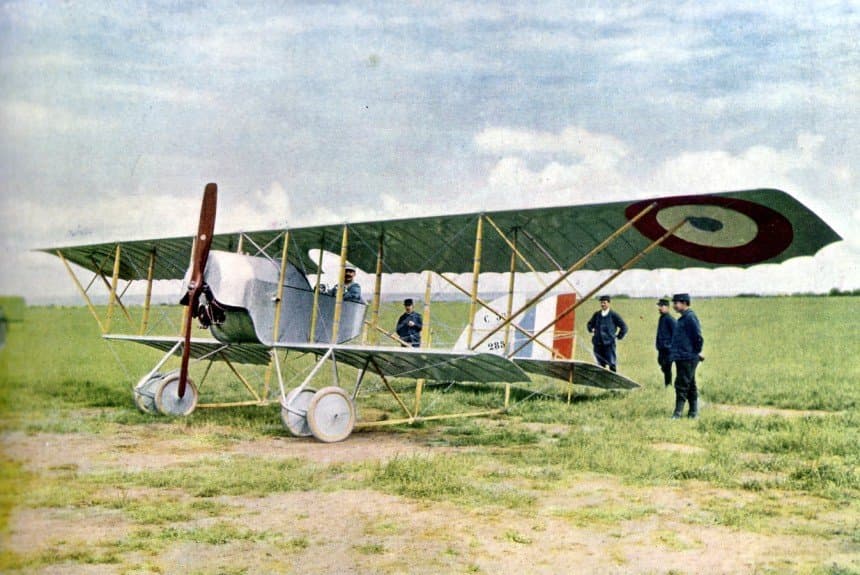
Credit
Jules Gervais-Courtellemont · Public domain · Resized · Public domain · Source ↗ · Modified


Preparing your view.

At a glance
Measured figures
Caudron G.III
Single sourceG.3 · Length
Single sourceConfiguration
| Specification | Caudron G.3 | Lockheed Hudson |
|---|---|---|
| Type | Reconnaissance aircraft[source] | Bomber , reconnaissance , transport , maritime patrol aircraft[source] |
| Manufacturer | Caudron[source] | Lockheed[source] |
| Primary users | Aéronautique Militaire US Army Air Service Finnish Air Force Polish Air Force[source] | Royal Air Force Royal Canadian Air Force Royal Australian Air Force United States Army Air Forces[source] |
| Introduction date | 1914 |
Length
Single source6.4 m (21 ft 0 in)[source]
6,40 m[source]
6,40 m[source]
6,40 m (21,0 ft )[source]
6,40 m[source]Caudron G.III
6,40 m[source]
6,40 m[source]
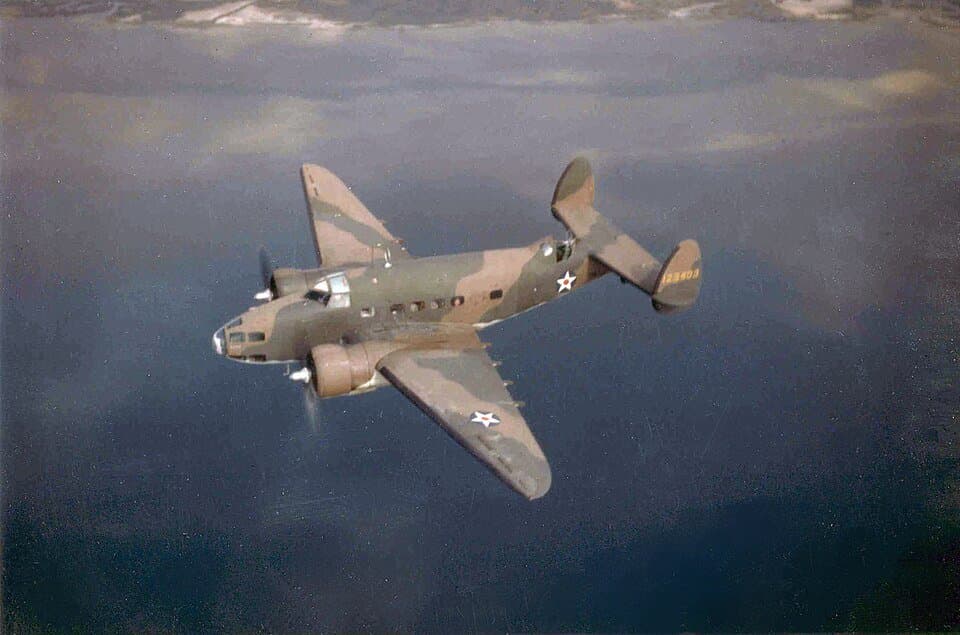
Hudson Mk I · Length
Single source44 ft 4 in (13.51 m)[source]
Caudron G.III
Single sourceG.3 · Wingspan
Single sourceWingspan
Single source13.4 m (44 ft 0 in)[source]
13,40 m[source]
13,40 m[source]
13,40 m (44,0 ft )[source]
13,40 m[source]Caudron G.III
13,40 m[source]
13,40 m[source]
Hudson Mk I · Wingspan
Single source65 ft 6 in (19.96 m)[source]
Empty; Empty weight
DisputedEmpty; G.3 · Empty weight
Single sourceMaximum take-off; G.3 · Max takeoff weight
Single source420 kg (926 lb)[source]
710 kg (1,565 lb)[source]
420 kg[source]
447 kg[source]
Empty; Hudson Mk I · Empty weight
Single sourceGross; Hudson Mk I · Gross weight
Single sourceG.3 · 1 × Le Rhône 9C 9-cylinder air-cooled rotary piston engine
Single source1 × Le Rhône 9C 9-cylinder air-cooled rotary piston engine, 60 kW (80 hp)[source]
Hudson Mk I · 2 × Wright GR-1820-G102A Cyclone 9-cylinder radial engines each
Single source2 × Wright GR-1820-G102A Cyclone 9-cylinder radial engines , 1,100 hp (820 kW) each[source]
G.3 · Endurance
Single source4 hours[source]
Hudson Mk I · 2,180 ft/min (
Single source2,180 ft/min (11.1 m/s)[source]
Bars compare reported quantities only. A larger figure does not make a system better; configurations and test conditions differ.
1939[source] |
| First flight | Late 1913[source] | 10 December 1938[source] |
|---|
| Developed from | Caudron G.2[source] | Lockheed Model 14 Super Electra[source] |
|---|
| Propellers | 2-bladed fixed-pitch propeller[source] | — |
|---|
| Guns | One light machine gun (optional)[source] | 2 × .303 in (7.7 mm) Browning machine guns in dorsal turret 2× .303 Browning machine guns in nose[source] |
|---|
| Bombs | hand released bombs (optional)[source] | 1,400 lb (640 kg) of bombs or depth charges[source] |
|---|
| Source measurement | Most G.3s were the A2 model, used by various airforces for artillery spotting on the Western front, in Russia and in the Middle East. The G.3 D2 was a two-seat trainer, equipped with dual controls and the E2 was a basic trainer. The R1 version (rouleur or roller) was used by France and the United States Air Service for taxi training , with the wing trimmed down to prevent its becoming airborne. The last version, the G.3. L2 , was equipped with a more powerful 100 hp (75 kW) Anzani 10 radial engine . In Germany, Gotha built a few copies of the G.3 as the Gotha LD.3 and Gotha LD.4 ( Land Doppeldecker – "Land Biplane").[source]Caudron G.3 · Variants; only the objects and conditions stated in this passage Length: 6.4 m (21 ft 0 in)[source]Caudron G.3 · Specifications (G.3); only the objects and conditions stated in this passage Wingspan: 13.4 m (44 ft 0 in)[source]Caudron G.3 · Specifications (G.3); only the objects and conditions stated in this passage Height: 2.5 m (8 ft 2 in)[source]Caudron G.3 · Specifications (G.3); only the objects and conditions stated in this passage Wing area: 27 m 2 (290 sq ft)[source]Caudron G.3 · Specifications (G.3); only the objects and conditions stated in this passage Empty weight: 420 kg (926 lb)[source]Caudron G.3 · Specifications (G.3); only the objects and conditions stated in this passage Max takeoff weight: 710 kg (1,565 lb)[source]Caudron G.3 · Specifications (G.3); only the objects and conditions stated in this passage Powerplant: 1 × Le Rhône 9C 9-cylinder air-cooled rotary piston engine, 60 kW (80 hp)[source]Caudron G.3 · Specifications (G.3); only the objects and conditions stated in this passage Maximum speed: 106 km/h (66 mph, 57 kn)[source]Caudron G.3 · Specifications (G.3); only the objects and conditions stated in this passage Endurance: 4 hours[source]Caudron G.3 · Specifications (G.3); only the objects and conditions stated in this passage Service ceiling: 4,300 m (14,100 ft)[source]Caudron G.3 · Specifications (G.3); only the objects and conditions stated in this passage | A total of 350 Mk I and 20 Hudson Mk IIs were supplied (the Mk II had different propellers ). These had two fixed Browning machine guns in the nose and two more in the Boulton Paul dorsal turret . The Hudson Mk III added one ventral and two beam machine guns and replaced the 1,100 hp Wright R-1820 Cyclone 9-cylinder radials with 1,200 hp versions (428 produced).[source]Lockheed Hudson · Design and development; only the objects and conditions stated in this passage The Hudson Mk V (309 produced) and Mk VI (450 produced) were powered by the 1,200 hp Pratt & Whitney R-1830 Twin Wasp 14-cylinder two-row radial. The RAF also obtained 380 Mk IIIA and 30 Mk IV Hudsons under the Lend-Lease program.[source]Lockheed Hudson · Design and development; only the objects and conditions stated in this passage Following Japanese landings at Kota Bharu during the Malayan campaign , Hudsons from No. 1 Squadron RAAF became the first Allied aircraft to make an attack in the Pacific War , sinking a Japanese transport ship, the Awazisan Maru , off Kota Bharu at 0118h local time, an hour before the attack on Pearl Harbor .[source]Lockheed Hudson · Operational history / World War II; only the objects and conditions stated in this passage High-scoring Japanese ace Saburō Sakai , praised the skill and fighting abilities of an RAAF Hudson crew killed in action over New Guinea after being engaged by nine highly manoeuvrable Mitsubishi A6M Zeroes on 22 July 1942. The crew, captained by P/O Warren Cowan, in Hudson Mk IIIA A16-201 (bu. no. 41-36979 ) of No. 32 Squadron RAAF , was intercepted over Buna by nine Zeroes of the Tainan Kaigun Kōkūtai led by Sakai. The Hudson crew accomplished many aggressive and unexpected turns, engaging the Japanese pilots in a dogfight for more than 10 minutes. It was only after Sakai scored hits on the rear/upper turret that the Hudson could be destroyed. Its crew made such an impression on Sakai that, after the war's end, he sought to identify them. In 1997, Sakai wrote formally to the Australian government, recommending that Cowan be "posthumously awarded your country's highest military decoration ". In 2023, the crew of A16-201 were posthumously awarded the Medal for Gallantry . |
|---|
| Engine | un rotativo Le Rhône 9C[source] Le Rhone C[source] | — |
|---|
| Propulsion | 1 × Le Rhône, 7-cylindrowy rotacyjny[source]Caudron G.III | — |
|---|
| Designer | — | Clarence "Kelly" Johnson[source] |
|---|
| Number built | — | 2,941[source] |
|---|
| Manufactured | — | 1938–1943[source] |
|---|
| Role | — | light bomber and coastal reconnaissance aircraft[source] |
|---|
| Country of origin | — | United States[source] United States[source] United States[source] United States[source] |
|---|
Maximum take-off; Max takeoff weight
Single sourceOn 23 November 1942, the crew of a No. 3 Squadron, Royal New Zealand Air Force (RNZAF) Hudson Mk IIIA, NZ2049 , ( 41-46465 ) after spotting an enemy convoy near Vella Lavella , was engaged by three Japanese floatplane fighters. After skilled evasive manoeuvring at an altitude of less than 50 feet (15 metres), by the Hudson's captain, Flying Officer George Gudsell, the crew returned with no casualties to Henderson Field , Guadalcanal.[source]Lockheed Hudson · Operational history / World War II; only the objects and conditions stated in this passage
Mk III with two 1,200 hp (890 kW) Pratt & Whitney R-1830-S3C4-G Twin Wasp engines; 409 built.[source]Lockheed Hudson · Variants; only the objects and conditions stated in this passage
US Military designation powered by two 1,050 hp (780 kW) Pratt & Whitney R-1830-45 engines; 52 lend-lease to Australia as Hudson IVA.[source]Lockheed Hudson · Variants; only the objects and conditions stated in this passage
US Military designation powered by two 1,200 hp (890 kW) Pratt & Whitney R-1830-67 engines, interiors convertible to troop transports; 450 lend-lease to RAF/RCAF/RNZAF as Hudson VI; 27 units passed to the Brazilian Air Force .[source]Lockheed Hudson · Variants; only the objects and conditions stated in this passage
US Military designation powered by two 1,200 hp (890 kW) Wright R-1820-87 engines; lend lease version intended for the RAF, 153 diverted to United States Army Air Forces (USAAF) as the RA-29 and 20 to the United States Navy (USN) as the PBO-1.[source]Lockheed Hudson · Variants; only the objects and conditions stated in this passage
Length: 44 ft 4 in (13.51 m)[source]Lockheed Hudson · Specifications (Hudson Mk I); only the objects and conditions stated in this passage
Wingspan: 65 ft 6 in (19.96 m)[source]Lockheed Hudson · Specifications (Hudson Mk I); only the objects and conditions stated in this passage
Height: 11 ft 10 in (3.61 m)[source]Lockheed Hudson · Specifications (Hudson Mk I); only the objects and conditions stated in this passage
Wing area: 551 sq ft (51.2 m 2 )[source]Lockheed Hudson · Specifications (Hudson Mk I); only the objects and conditions stated in this passage
Empty weight: 11,630 lb (5,275 kg)[source]Lockheed Hudson · Specifications (Hudson Mk I); only the objects and conditions stated in this passage
Gross weight: 17,500 lb (7,938 kg)[source]Lockheed Hudson · Specifications (Hudson Mk I); only the objects and conditions stated in this passage
Powerplant: 2 × Wright GR-1820-G102A Cyclone 9-cylinder radial engines , 1,100 hp (820 kW) each[source]Lockheed Hudson · Specifications (Hudson Mk I); only the objects and conditions stated in this passage
Maximum speed: 246 mph (396 km/h, 214 kn) at 6,500 ft (2,000 m)[source]Lockheed Hudson · Specifications (Hudson Mk I); only the objects and conditions stated in this passage
Cruise speed: 220 mph (350 km/h, 190 kn)[source]Lockheed Hudson · Specifications (Hudson Mk I); only the objects and conditions stated in this passage
Range: 1,960 mi (3,150 km, 1,700 nmi)[source]Lockheed Hudson · Specifications (Hudson Mk I); only the objects and conditions stated in this passage
Service ceiling: 25,000 ft (7,600 m)[source]Lockheed Hudson · Specifications (Hudson Mk I); only the objects and conditions stated in this passage
Rate of climb: 2,180 ft/min (11.1 m/s)[source]Lockheed Hudson · Specifications (Hudson Mk I); only the objects and conditions stated in this passage
Guns: 2 × .303 in (7.7 mm) Browning machine guns in dorsal turret 2× .303 Browning machine guns in nose[source]Lockheed Hudson · Specifications (Hudson Mk I); only the objects and conditions stated in this passage
Bombs: 1,400 lb (640 kg) of bombs or depth charges[source]Lockheed Hudson · Specifications (Hudson Mk I); only the objects and conditions stated in this passage