

Credit
Jauhsekali · CC BY-SA 4.0 · Resized · CC BY-SA 4.0 · Source ↗ · Modified


Preparing your view.

At a glance
True scale
Side by side. From every angle. A human reference for perspective.
3.38 MB · Loads when you open it| Model | Length | Width / span | Height |
|---|---|---|---|
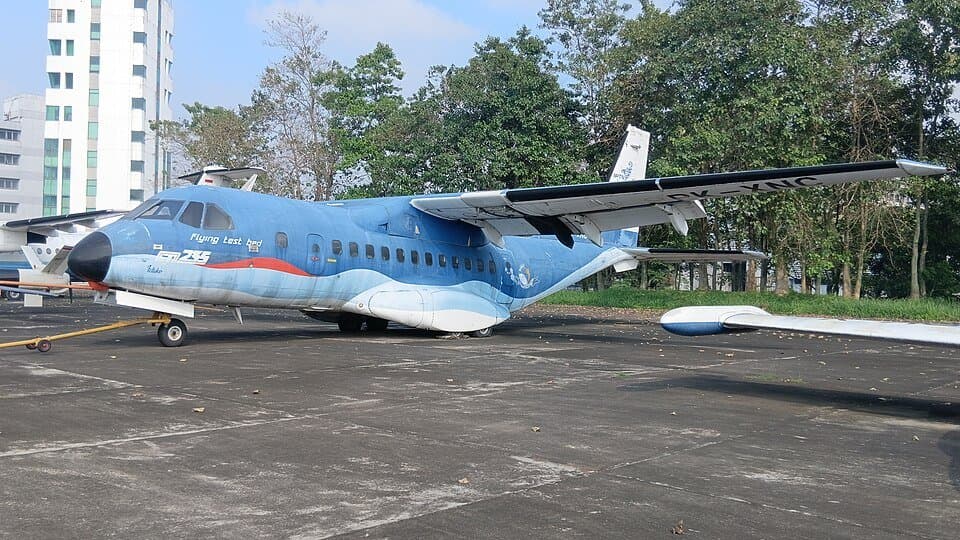
| CASA/IPTN CN-235 | ≈ 21.4 m | ≈ 25.81 m (Width) | ≈ 8.18 m |
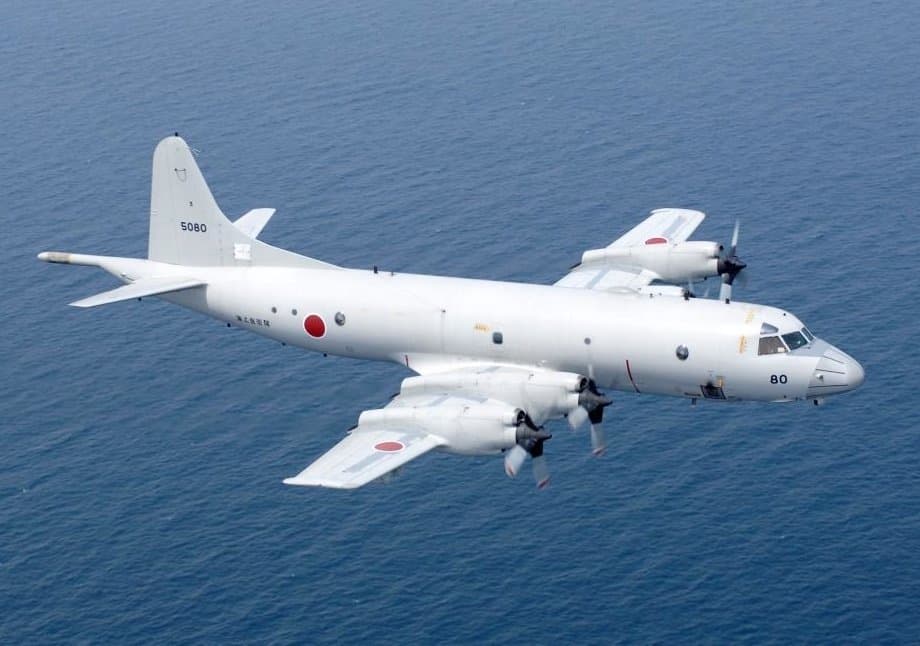
| Lockheed P-3 Orion | ≈ 35.61 m | ≈ 30.38 m (Width) | ≈ 10.28 m |
Scaled uniformly to the sourced length of 21.4 m. The height was fitted to the sourced 8.18 m; the width was fitted to the sourced 25.81 m. Not an official model or a measured survey.
ForceTally · All rights reserved
Scaled uniformly to the sourced length of 35.61 m. The shape was turned square to the axes; the height was fitted to the sourced 10.274 m; the width was fitted to the sourced 30.38 m. Not an official model or a measured survey.
ForceTally · All rights reserved
The human reference is a generic 1.75 m figure. Models describe external size, not combat performance.
Measured figures
CN235 · Length
Single source21.40 m (70 ft 2.5 in)[source]
Configuration
| Specification | CASA/IPTN CN-235 | Lockheed P-3 Orion |
|---|---|---|
| Type | Transport aircraft / maritime patrol aircraft[source] | Maritime patrol aircraft[source] |
| National origin | Spain / Indonesia[source] | United States[source] |
| Manufacturer | CASA IPTN[source] | Lockheed Lockheed Martin Kawasaki Aerospace Company[source] |
| Status | In service[source] | Active |
P-3C Orion · Length
116 ft 10 in (35.61 m)[source]
Cruise; CN235 · at 4,575 m (15,000 ft)
Single source450 km/h (286 mph, 248 kn) at 4,575 m (15,000 ft)[source]
Cruise; P-3C Orion · at 25,000 ft (7,600 m) and 110,000 lb (50,000 kg)
Single sourceMaximum; P-3C Orion · at 15,000 ft (4,600 m) and 105,000 lb (48,000 kg)
Single source411 kn (473 mph, 761 km/h) at 15,000 ft (4,600 m) and 105,000 lb (48,000 kg)[source]
328 kn (377 mph, 607 km/h) at 25,000 ft (7,600 m) and 110,000 lb (50,000 kg)[source]
P-3C Orion · (3 hours on station at 1,500 ft (460 m))
Single source1,345 nmi (1,548 mi, 2,491 km) (3 hours on station at 1,500 ft (460 m))[source]
CN235 · 2 × General Electric CT7 -9C3 turboprops each (take-off)
Single source2 × General Electric CT7 -9C3 turboprops , 1,305 kW (1,750 hp) each (take-off)[source]
P-3C Orion · 4 × Allison T56-A-14 turboprop engines, 4,910 shp ( ) each (equivalent
Single source4 × Allison T56-A-14 turboprop engines, 4,910 shp (3,660 kW) each (equivalent)[source]
P-3C Orion · at 15,000 ft (4,600 m) on two engines
Single source17 hours 12 minutes at 15,000 ft (4,600 m) on two engines[source]
Bars compare reported quantities only. A larger figure does not make a system better; configurations and test conditions differ.
| Primary users | Turkish Air Force French Air and Space Force Indonesian Air Force Royal Malaysian Air Force[source] | United States Navy Republic of China Navy Japan Maritime Self-Defense Force Republic of Korea Navy[source] |
|---|
| Number built | 286 (IPTN 69 )[source] | Lockheed – 650, Kawasaki – 107, Total – 757[source] |
|---|
| Manufactured | 1983–present[source] | 1961–1990[source] |
|---|
| Introduction date | 1 March 1988[source] | August 1962[source] |
|---|
| First flight | 11 November 1983[source] | November 1959[source] |
|---|
| Variant | EADS HC-144 Ocean Sentry[source] | — |
|---|
| Developed into | EADS CASA C-295 Indonesian Aerospace N245[source] | Lockheed P-7[source] |
|---|
| Capacity | 51 passengers, 35 paratroops, 18 stretchers or four HCU-6/E pallets including one on the ramp and 6,000 kg (13,100 lb)[source] | — |
|---|
| Aspect ratio | 11.27:1[source] | 7.5[source] |
|---|
| Airfoil | NACA 65 3 -218[source] | root: NACA 0014 modified ; tip: NACA 0012 modified[source] |
|---|
| Fuel capacity | 4150 kg[source] | 9,200 US gal (7,700 imp gal; 35,000 L) usable fuel in 5 wing and fuselage tanks; (62,500 lb (28,350 kg) maximum fuel weight); 111 US gal (92 imp gal; 420 L) usable oil in 4 tanks[source] |
|---|
| Propellers | 4-bladed Hamilton Sundstrand 14RF Propeller[source] | 4-bladed Hamilton Standard 54H60-77, 13 ft 6 in (4.11 m) diameter constant-speed fully-feathering reversible propellers[source] |
|---|
| Stall speed | 156 km/h (97 mph, 84 kn) (flaps down)[source] | 133 kn (153 mph, 246 km/h) flaps up[source] |
|---|
| Role | medium-range twin-engined turboprop tactical transport aircraft[source] | — |
|---|
| Source measurement | The CN-235 has been conceived of during the late 1970s as a twin- turboprop powered transport capable of accommodating up to 35 passengers or various military payloads. It had been observed that there was a growing global market for such transports, while there was also a need in the domestic market. The Spanish aerospace company Construcciones Aeronáuticas SA (CASA) was keen to seek out international collaboration to develop this concept into a working programme, and promptly approach the newly formed Indonesian company IPTN (later known as Indonesian Aerospace or PT. Dirgantara Indonesia ). The company was offered an equal share in the venture along with technology transfer opportunities from CASA, and was presented as being mutually beneficial from an economic standpoint. Coincidentally, IPTN had been independently looking into possible configurations for such an aircraft prior to CASA's approach.[source]CASA/IPTN CN-235 · Design and development / Background; only the objects and conditions stated in this passage Its main cabin facilitated a four-abreast single-aisle seating arrangement, which could accommodate up to 44 passengers in the most dense seating configuration.[source]CASA/IPTN CN-235 · Design and development / Background; only the objects and conditions stated in this passage The third phase of development was to secure certification and to conduct the aircraft's first delivery to customers. In support of this effort, static and fatigue testing was conducted by the Serpong Laboratory for Structural Testing. By September 1984, orders for several dozen aircraft had been secured at a reported unit cost of $6m; many of these early orders for the type had originated from local customers within the two partner company's home nations.[source]CASA/IPTN CN-235 · Design and development / Into flight; only the objects and conditions stated in this passage The Royal Malaysian Air Force has operated a fleet of CN-235 transports. During early 2020, it was announced that several Malaysian aircraft would be converted into a maritime surveillance configuration using financial assistance from the United States. On 17 June 2022, the Royal Malaysian Air Force receive the first of three such modified CN235-220M MSA as part of the Malaysian Maritime Security Initiative program.[source]CASA/IPTN CN-235 · Operational history / Military sector; only the objects and conditions stated in this passage During 1992, Aerolíneas Argentinas , which was a subsidiary of Iberia at that time, ordered a pair of CN-235s to be operated by its own subsidiary, Austral . In August 2006, it was reported that several CASA CN-235-10 were in service with African airlines, including two operated by Safair and one with Tiko Air . Around 2007, Asian Spirit operated a lone CN-235-220 in the Philippines.[source]CASA/IPTN CN-235 · Operational history / Commercial airliner; only the objects and conditions stated in this passage During 2015, Indonesian Aerospace announced that they were in the early stages of developing a new variant of the CN-235, the N245 , which has been specifically designed to perform civil operations and is able to carry up to 60 passengers. Alternatively also referred to as the CN-235NG , this variant is planned to be fully launched following the completion of the Indonesian Aerospace N219 project, at one point, it was expected to be fully certified sometime in 2019. A further derivative has been envisioned, referred to as the N-270 , it is a stretched version of the N245 and is planned to be able to carry up to 70–90 passengers; the original timeframe for development was set between 2019 and 2024.[source]CASA/IPTN CN-235 · Operational history / Commercial airliner; only the objects and conditions stated in this passage Generally as series 10, but with GE CT7-9C engines in new composites nacelles; replaced Series 10 in 1988 from 31st production aircraft. Series 100 is Spanish-built, series 110 Indonesian-built, with improved electrical, warning and environmental systems.[source]CASA/IPTN CN-235 · Variants; only the objects and conditions stated in this passage Modification of Series 200/220, offered by IPTN with new Honeywell avionics, ARL-2002 EW system and 16,800 kg/37,037 lb MTOW, to the Royal Australian Air Force to meet Project Air 5190 tactical airlift requirement, but was forced by financial constraints to withdraw in 1998.[source]CASA/IPTN CN-235 · Variants; only the objects and conditions stated in this passage A light gunship modified with integrated weapons pylons to carry AGM-114 Hellfire missiles and 70 mm rockets ; it also has a side-mounted 30 mm cannon and a Synthetic aperture radar .[source]CASA/IPTN CN-235 · Variants; only the objects and conditions stated in this passage The Royal Brunei Air Force operates one CN235-110M.[source]CASA/IPTN CN-235 · Operators / Military operators; only the objects and conditions stated in this passage The Royal Saudi Air Force operates four CN235-10M, two of which are used for VIP purposes.[source]CASA/IPTN CN-235 · Operators / Military operators; only the objects and conditions stated in this passage On 18 October 1992, Merpati Nusantara Airlines (Registration PK-MNN) CN-235-10 Flight 5601 crashed in Garut , Indonesia, killing all 31 people on board,[source]CASA/IPTN CN-235 · Notable accidents; only the objects and conditions stated in this passage On 19 January 2001, a Turkish Air Force CN-235 training mission crashed near Kayseri after entering a spin from which recovery was not possible, killing all three people on board.[source]CASA/IPTN CN-235 · Notable accidents; only the objects and conditions stated in this passage On 16 May 2001, a Turkish Air Force CN-235 crashed after the pilot lost control, killing all 34 people on board.[source]CASA/IPTN CN-235 · Notable accidents; only the objects and conditions stated in this passage On 18 May 2001, a Turkish Navy CN-235 crashed after the pilot lost control after reaching an altitude of just 100 feet, killing all 4 people on board.[source]CASA/IPTN CN-235 · Notable accidents; only the objects and conditions stated in this passage On 29 August 2001, Binter Mediterráneo Flight 8261 (Registration EC-FBC) crash-landed at Málaga , Spain, killing four of the 47 passengers and crew aboard. The aircraft was scrapped.[source]CASA/IPTN CN-235 · Notable accidents; only the objects and conditions stated in this passage On 11 February 2013, a CN-235 crashed into a forest 45 km south of Monrovia , Liberia , 8 km to Roberts International Airport , killing 11 people amongst them Souleymane Kelefa Diallo , Guinea army chief.[source]CASA/IPTN CN-235 · Notable accidents; only the objects and conditions stated in this passage On 1 August 2015 a CN-235-200M operated by the Colombian Air Force crashed in Cesar province, Colombia due to engine failure, killing 11 people.[source]CASA/IPTN CN-235 · Notable accidents; only the objects and conditions stated in this passage Capacity: 51 passengers, 35 paratroops, 18 stretchers or four HCU-6/E pallets including one on the ramp and 6,000 kg (13,100 lb)[source]CASA/IPTN CN-235 · Specifications (CN235); only the objects and conditions stated in this passage Length: 21.40 m (70 ft 2.5 in)[source]CASA/IPTN CN-235 · Specifications (CN235); only the objects and conditions stated in this passage Wingspan: 25.81 m (84 ft 8 in)[source]CASA/IPTN CN-235 · Specifications (CN235); only the objects and conditions stated in this passage Height: 8.18 m (26 ft 10 in)[source]CASA/IPTN CN-235 · Specifications (CN235); only the objects and conditions stated in this passage Wing area: 59.10 m 2 (636.1 sq ft)[source]CASA/IPTN CN-235 · Specifications (CN235); only the objects and conditions stated in this passage Empty weight: 9,800 kg (21,605 lb)[source]CASA/IPTN CN-235 · Specifications (CN235); only the objects and conditions stated in this passage Max takeoff weight: 16,100 kg (35,420 lb)[source]CASA/IPTN CN-235 · Specifications (CN235); only the objects and conditions stated in this passage Fuel capacity: 4150 kg[source]CASA/IPTN CN-235 · Specifications (CN235); only the objects and conditions stated in this passage Powerplant: 2 × General Electric CT7 -9C3 turboprops , 1,305 kW (1,750 hp) each (take-off)[source]CASA/IPTN CN-235 · Specifications (CN235); only the objects and conditions stated in this passage Cruise speed: 450 km/h (286 mph, 248 kn) at 4,575 m (15,000 ft)[source]CASA/IPTN CN-235 · Specifications (CN235); only the objects and conditions stated in this passage Stall speed: 156 km/h (97 mph, 84 kn) (flaps down)[source]CASA/IPTN CN-235 · Specifications (CN235); only the objects and conditions stated in this passage Range: 4,355 km (2,706 mi, 2,350 nmi)[source]CASA/IPTN CN-235 · Specifications (CN235); only the objects and conditions stated in this passage Service ceiling: 9,100 m (30,000 ft)[source]CASA/IPTN CN-235 · Specifications (CN235); only the objects and conditions stated in this passage Rate of climb: 7.8 m/s (1,780 ft/min)[source]CASA/IPTN CN-235 · Specifications (CN235); only the objects and conditions stated in this passage | — |
|---|
| Developed from | — | Lockheed L-188 Electra[source] |
|---|
| Variants | — | Lockheed AP-3C Orion Lockheed CP-140 Aurora Lockheed EP-3 Lockheed WP-3D Orion[source] |
|---|
| Hardpoints | — | 10 wing stations in total (3x on each wing and 2x on each wing root) and eight internal bomb bay stations with a capacity of 20,000 lb (9,100 kg) , with provisions to carry combinations of: Rockets: None Missiles: Air-to-surface missile :4× AGM-65 Maverick , 6× AGM-84 Harpoon , 4× AGM-84 Standoff Land Attack Missile (SLAM-ER) Bombs: Depth charges , Mk 101 Lulu nuclear depth bomb ,10× Mk 20 Rockeye , MK80 Series (18×MK82, MK83, MK84) general-purpose bombs, B57 nuclear bomb (US service only, retired 1993) Other: Mk 44 (mostly retired from service), 8× Mk 46 , 6× Mk 50 , 7× Mk 54 or MU90 Impact torpedoes Mk 25, Mk 39, Mk 55, 7× Mk 56, Mk 60 CAPTOR or 6× Mk 65 or 18× Mk 62 or 11×Mk 63 Quickstrike naval mines Active and passive Sonobuoys[source] |
|---|
| Zero-fuel weight | — | 77,200 lb (35,017 kg)[source] |
|---|
| Maximum landing weight | — | (MLW) 103,880 lb (47,119 kg)[source] |
|---|
| Patrol speed | — | 206 kn (237 mph; 382 km/h) at 1,500 ft (460 m) and 110,000 lb (50,000 kg)[source] |
|---|
| Time to altitude | — | 25,000 ft (7,600 m) in 30 minutes[source] |
|---|
| Wing loading | — | 103.8 lb/sq ft (507 kg/m 2 )[source] |
|---|
| Power/mass | — | 0.1455 hp/lb (0.2392 kW/kg) (equivalent)[source] |
|---|
| Take-off run | — | 4,240 ft (1,290 m)[source] |
|---|
| Take-off distance to 50 ft (15 m) | — | 5,490 ft (1,670 m)[source] |
|---|
| Landing distance from 50 ft (15 m) | — | 2,770 ft (840 m)[source] |
|---|
| Rockets | — | None[source] |
|---|
| Missiles | — | Air-to-surface missile :4× AGM-65 Maverick , 6× AGM-84 Harpoon , 4× AGM-84 Standoff Land Attack Missile (SLAM-ER)[source] |
|---|
| Bombs | — | Depth charges , Mk 101 Lulu nuclear depth bomb ,10× Mk 20 Rockeye , MK80 Series (18×MK82, MK83, MK84) general-purpose bombs, B57 nuclear bomb (US service only, retired 1993)[source] |
|---|
| Other | — | Mk 44 (mostly retired from service), 8× Mk 46 , 6× Mk 50 , 7× Mk 54 or MU90 Impact torpedoes Mk 25, Mk 39, Mk 55, 7× Mk 56, Mk 60 CAPTOR or 6× Mk 65 or 18× Mk 62 or 11×Mk 63 Quickstrike naval mines Active and passive Sonobuoys[source] |
|---|