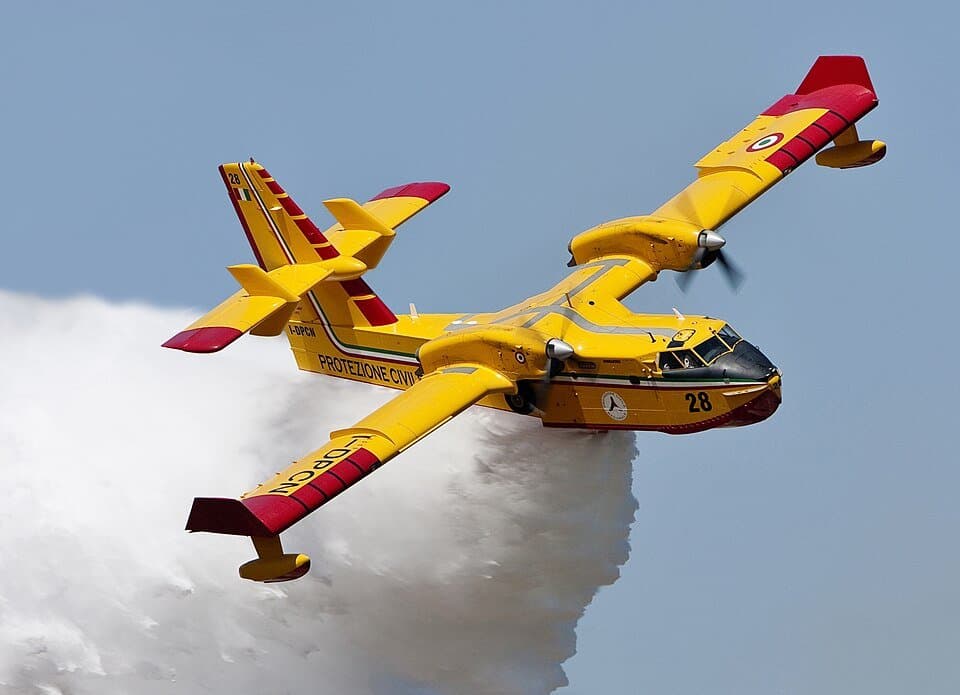

Credit
Maarten Visser · CC BY-SA 2.0 · Resized · CC BY-SA 2.0 · Source ↗ · Modified


Preparing your view.
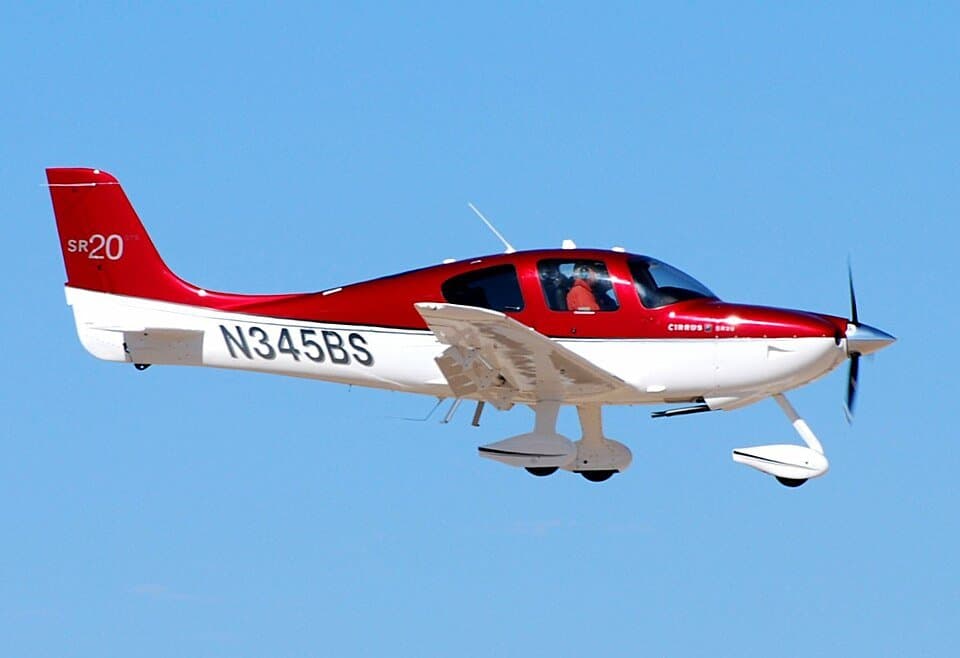

At a glance
Measured figures
CL-415 · Length
Single source20.4 m (66 ft 11 in)[source]
SR20-G3 · Length
Single sourceConfiguration
| Specification | Canadair CL-415 | Cirrus SR20 |
|---|---|---|
| Role | Firefighting aircraft[source] | — |
| National origin | Canada[source] | United States[source] |
| Manufacturer | Canadair Bombardier Aerospace De Havilland Canada[source] | Cirrus Aircraft[source] |
| Status | In service[source] | — |
| Primary users | Vigili del Fuoco (Italy) Sécurité Civile (France) Hellenic Air Force (Greece) Service Aérien Gouvernemental |
26 ft 0 in (7.92 m)[source]
Empty; CL-415 · Empty weight
Single sourceGross; CL-415 · Maximum After-scooping Weight
Single sourceMaximum take-off; CL-415 · Firefighting, Land
Single source13,608 kg (30,000 lb)[source]
21,319 kg (47,000 lb) Maximum After-scooping Weight[source]
19,890 kg (43,850 lb) Firefighting, Land[source]
Empty; SR20-G3 · Empty weight
Single sourceGross; SR20-G3 · Gross weight
Single sourceFerry; CL-415 · 278 km/h (150 kn) Long Range Cruise
Single source2,427 km (1,508 mi, 1,310 nmi) 278 km/h (150 kn) Long Range Cruise[source]
CL-415 · 2 × Pratt & Whitney Canada PW123AF turboprop each ISA+20 °C Flat rated
Single source2 × Pratt & Whitney Canada PW123AF turboprop , 1,775 kW (2,380 hp) each ISA+20 °C Flat rated[source]
SR20-G3 · 1 × Continental IO-360-ES six cylinder, horizontally-opposed piston aircraft engine
Single source1 × Continental IO-360-ES six cylinder, horizontally-opposed piston aircraft engine , 200 hp (150 kW)[source]
CL-415 · Wing area
Single source100 m 2 (1,080 sq ft)[source]
CL-415 · at 200 nmi (370 km) from base
Single source3 hours at 200 nmi (370 km) from base[source]
SR20-G3 · Service ceiling
Single source17,500 ft (5,300 m)[source]
Bars compare reported quantities only. A larger figure does not make a system better; configurations and test conditions differ.
| — |
| Number built | 95[source] | 2,084 (through 2025)[source] |
|---|
| Manufactured | CL-415: 1993–2015 DHC-515: 2026–[source] | 1999–present[source] |
|---|
| Introduction date | 1994[source] | — |
|---|
| First flight | 6 December 1993[source] | 21 March 1995[source] |
|---|
| Developed from | Canadair CL-215[source] | — |
|---|
| Capacity | 6,137 L (1,350 imp gal; 1,621 US gal) (waterbombing), up to 18 paratroops, up to 2,903 kg (6,400 lb) of cargo[source] | 3 passengers (4 using 60/40 flex seating in post-2012 models)[source] |
|---|
| Aspect ratio | 8.03[source] | — |
|---|
| Fuel capacity | 4,650 kg (10,250 lb) 5812 L ( 1535 US Gal; 1278 imp Gal)[source] | — |
|---|
| Cabin volume | 35.6 m 3 (1,260 cu ft)[source] | — |
|---|
| Propellers | 4-bladed Hamilton Sundstrand 14SF-19, 3.97 m (13 ft 0 in) diameter Fully reversible, feathering blades[source] | 3-bladed[source] |
|---|
| Stall speed | 126 km/h (78 mph, 68 kn) MLW, Landing Configuration[source] | 56 kn (64 mph, 104 km/h) CAS[source] |
|---|
| g limits | +3.25−1.0 g[source] | — |
|---|
| Wing loading | 212.5 kg/m 2 (43.52 lb/sq ft) Maximum After-scooping[source] | — |
|---|
| Takeoff (ISA) | 783 m (2,569 ft) (land), 814 m (2,671 ft) (water)[source] | — |
|---|
| Landing (ISA) | 674 m (2,211 ft) (land), 665 m (2,182 ft) (water)[source] | — |
|---|
| Type | — | Light aircraft[source] |
|---|
| Developed into | — | Cirrus SR22[source] |
|---|