
Credit
OTOMATICC · CC BY-SA 4.0 · Resized · CC BY-SA 4.0 · Source ↗ · Modified


Preparing your view.

At a glance
Measured figures
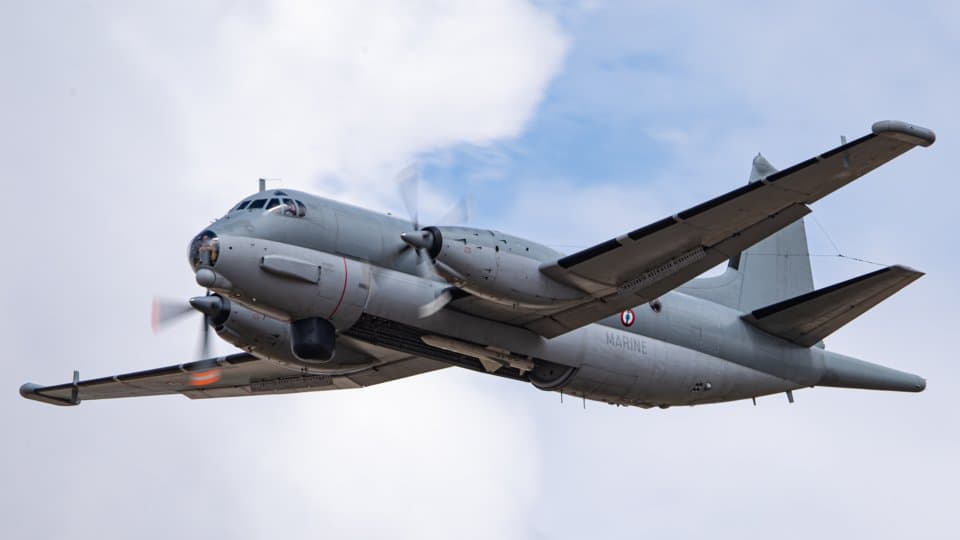
Atlantique 2 · Length
Single source31.62 m (103 ft 9 in)[source]
Configuration
| Specification | Bréguet 1150 Atlantic | Lockheed Hudson |
|---|---|---|
| Type | Maritime patrol aircraft[source] | Bomber , reconnaissance , transport , maritime patrol aircraft[source] |
| Manufacturer | Breguet Aviation[source] | Lockheed[source] |
| Status | Active service[source] | — |
| Primary users | French Navy German Navy Italian Air Force Royal Netherlands Navy[source] | Royal Air Force Royal Canadian Air Force Royal Australian Air Force United States Army Air Forces |
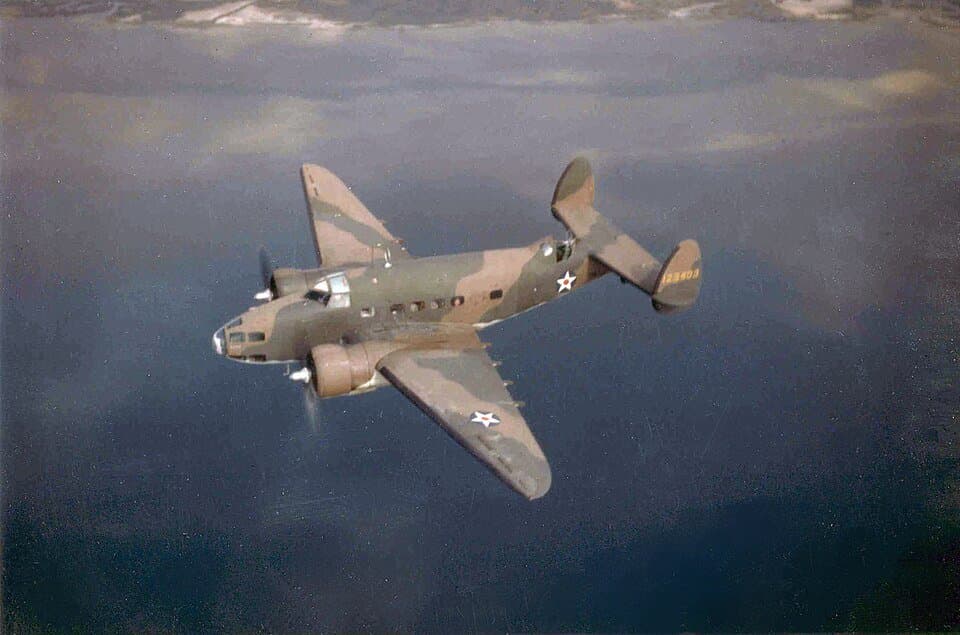
Hudson Mk I · Length
44 ft 4 in (13.51 m)[source]
Empty; Atlantique 2 · Empty weight
Single sourceGross; Atlantique 2 · Gross weight
Single sourceMaximum take-off; Atlantique 2 · Max takeoff weight
Single source25,700 kg (56,659 lb)[source]
45,000 kg (99,208 lb)[source]
46,200 kg (101,854 lb)[source]
Empty; Hudson Mk I · Empty weight
Single sourceGross; Hudson Mk I · Gross weight
Single sourceCruise; Atlantique 2 · patrol speed
Single sourceMaximum; Atlantique 2 · Maximum speed
Single source648 km/h (403 mph, 350 kn)[source]
315 km/h (196 mph, 170 kn) patrol speed[source]
Cruise; Hudson Mk I · Cruise speed
Single sourceMaximum; Hudson Mk I · at 6,500 ft (2,000 m)
Single sourceAtlantique 2 · 2 × Rolls-Royce Tyne RTy.20 Mk 21 2-spool turboprop engines (6,100 shp) each (equivalent)
Single source2 × Rolls-Royce Tyne RTy.20 Mk 21 2-spool turboprop engines, 4,500 kW (6,100 shp) each (equivalent)[source]
Hudson Mk I · 2 × Wright GR-1820-G102A Cyclone 9-cylinder radial engines each
Single source2 × Wright GR-1820-G102A Cyclone 9-cylinder radial engines , 1,100 hp (820 kW) each[source]
Atlantique 2 · Endurance
Single source18 hours[source]
Bars compare reported quantities only. A larger figure does not make a system better; configurations and test conditions differ.
| Number built | 87 Atlantique 1 28 Atlantique 2[source] | 2,941[source] |
|---|
| Manufactured | 1961–1987[source] | 1938–1943[source] |
|---|
| Introduction date | 1965[source] | 1939[source] |
|---|
| First flight | 21 October 1961[source] | 10 December 1938[source] |
|---|
| Capacity | 12 passengers or relief crew[source] | — |
|---|
| Stall speed | 167 km/h (104 mph, 90 kn) flaps down[source] | — |
|---|
| Role | long-range maritime patrol aircraft[source] | light bomber and coastal reconnaissance aircraft[source] |
|---|
| Source measurement | By 2012, the Atlantique 2 had been rebranded as the ATL2, at which point France had a total of 22 in service. In 2012, 18 French Atlantiques were undergoing a series of upgrades to increase the type's effectiveness in two stages, Phase I addressing obsolescence issues and Phase II adding new capabilities. Also in 2012, a separate project was conducted to integrate the MU90 Impact torpedo. Aircraft that received these upgrades shall have an extended service life as well, enabling Atlantique operations to be extended to around 2032.[source]Bréguet 1150 Atlantic · Development; only the objects and conditions stated in this passage The Breguet Br.1150 Atlantic is a twin-engined, mid-winged monoplane with a "double-bubble" fuselage; the upper lobe comprising a pressurised crew compartment, and the lower lobe housing a 9 m (27 ft 6 in) long weapons bay, with sonobuoy tubes aft of the weapons bay. A radar scanner is housed in a retractable underfuselage radome , while a magnetic anomaly detector is housed in a tail boom. It is powered by a pair of Rolls-Royce Tyne turboprop engines. An all-aluminium structure is used throughout the Atlantic's airframe; corrosion is alleged to be a considerable problem due to environmental factors imposed by the maritime environment.[source]Bréguet 1150 Atlantic · Design; only the objects and conditions stated in this passage Power for the Atlantique 2 was served through 2 x Rolls-Royce Tyne RTy.20 Mk 21 series turboprop engines (twin shaft) developing 6,100 horsepower each.[source]Bréguet 1150 Atlantic · Variants / Atlantique 2; only the objects and conditions stated in this passage maximum speed of 400 miles per hour,[source]Bréguet 1150 Atlantic · Variants / Atlantique 2; only the objects and conditions stated in this passage cruising speed of 200 miles per hour,[source]Bréguet 1150 Atlantic · Variants / Atlantique 2; only the objects and conditions stated in this passage ferry range of 5,635 miles[source]Bréguet 1150 Atlantic · Variants / Atlantique 2; only the objects and conditions stated in this passage mission endurance time of up to 18 hours[source]Bréguet 1150 Atlantic · Variants / Atlantique 2; only the objects and conditions stated in this passage operations at altitudes from 100 feet up to 30,000 feet through use of a pressurized cabin and flight deck.[source]Bréguet 1150 Atlantic · Variants / Atlantique 2; only the objects and conditions stated in this passage Rate-of-climb at 2,900 feet per minute.[source]Bréguet 1150 Atlantic · Variants / Atlantique 2; only the objects and conditions stated in this passage French Navy French Naval Aviation – The original model was retired in 1996. Second generation Atlantique 2 in service. To be replaced by Airbus A321MPA .[source]Bréguet 1150 Atlantic · Operators / Current operators; only the objects and conditions stated in this passage 15 August 1973 - A Dutch marine surveillance Breguet serial 257 suffered a problem with the elevator and ditched at 1500 hrs 1.5 km off the beach at Wassenaar, Netherlands. All 14 crew survived. The aircraft remained afloat and was salvaged, but later scrapped.[source]Bréguet 1150 Atlantic · Accidents and incidents; only the objects and conditions stated in this passage 15 January 1981 – A Dutch Marine Atlantic SP-13A was shadowing the Soviet Navy aircraft carrier Kiev in foul weather, with 30 ft waves and blizzard conditions. The Atlantic's crew transmitted a Mayday at 09:58 after suffering control problems due to a control rod failure in the horizontal stabilizer. It was not able to maintain height and was forced to ditch 113 miles west of the Inner Hebrides about half an hour later. Nine survivors were rescued by an RAF Sea King helicopter about two hours after the crash. Three crew members drowned.[source]Bréguet 1150 Atlantic · Accidents and incidents; only the objects and conditions stated in this passage March 10 1981 – Shortly after taking off from Prince Said Ibrahim International Airport in Moroni, Comoros, on a maritime patrol mission over the Mozambique Channel, a French Navy Breguet 1150 Atlantic number 29 from Lann-Bihoué (France) flotilla 23F crashes into the mountain 15 kilometers (9.4 miles) from the airport, killing all 18 people on board. One engine caught fire shortly after take off.[source]Bréguet 1150 Atlantic · Accidents and incidents; only the objects and conditions stated in this passage 18 May 1986 – While flying in cloud, a French Navy Atlantic crashed into a mountain in Djibouti , killing all 19 people on board.[source]Bréguet 1150 Atlantic · Accidents and incidents; only the objects and conditions stated in this passage Capacity: 12 passengers or relief crew[source]Bréguet 1150 Atlantic · Specifications (Atlantique 2); only the objects and conditions stated in this passage Length: 31.62 m (103 ft 9 in)[source]Bréguet 1150 Atlantic · Specifications (Atlantique 2); only the objects and conditions stated in this passage Wingspan: 37.42 m (122 ft 9 in) including wingtip pods[source]Bréguet 1150 Atlantic · Specifications (Atlantique 2); only the objects and conditions stated in this passage Height: 10.89 m (35 ft 9 in)[source]Bréguet 1150 Atlantic · Specifications (Atlantique 2); only the objects and conditions stated in this passage Wing area: 120.34 m 2 (1,295.3 sq ft)[source]Bréguet 1150 Atlantic · Specifications (Atlantique 2); only the objects and conditions stated in this passage Empty weight: 25,700 kg (56,659 lb)[source]Bréguet 1150 Atlantic · Specifications (Atlantique 2); only the objects and conditions stated in this passage Gross weight: 45,000 kg (99,208 lb)[source]Bréguet 1150 Atlantic · Specifications (Atlantique 2); only the objects and conditions stated in this passage Max takeoff weight: 46,200 kg (101,854 lb)[source]Bréguet 1150 Atlantic · Specifications (Atlantique 2); only the objects and conditions stated in this passage Powerplant: 2 × Rolls-Royce Tyne RTy.20 Mk 21 2-spool turboprop engines, 4,500 kW (6,100 shp) each (equivalent)[source]Bréguet 1150 Atlantic · Specifications (Atlantique 2); only the objects and conditions stated in this passage Maximum speed: 648 km/h (403 mph, 350 kn)[source]Bréguet 1150 Atlantic · Specifications (Atlantique 2); only the objects and conditions stated in this passage Cruise speed: 315 km/h (196 mph, 170 kn) patrol speed[source]Bréguet 1150 Atlantic · Specifications (Atlantique 2); only the objects and conditions stated in this passage Stall speed: 167 km/h (104 mph, 90 kn) flaps down[source]Bréguet 1150 Atlantic · Specifications (Atlantique 2); only the objects and conditions stated in this passage Endurance: 18 hours[source]Bréguet 1150 Atlantic · Specifications (Atlantique 2); only the objects and conditions stated in this passage Service ceiling: 9,145 m (30,000 ft)[source]Bréguet 1150 Atlantic · Specifications (Atlantique 2); only the objects and conditions stated in this passage Rate of climb: 14.7 m/s (2,900 ft/min)[source]Bréguet 1150 Atlantic · Specifications (Atlantique 2); only the objects and conditions stated in this passage Up to 3,500 kg (7,700 lb), including torpedoes , depth charges , mines , anti-ship missiles , bombs and/or buoys[source]Bréguet 1150 Atlantic · Specifications (Atlantique 2); only the objects and conditions stated in this passage | A total of 350 Mk I and 20 Hudson Mk IIs were supplied (the Mk II had different propellers ). These had two fixed Browning machine guns in the nose and two more in the Boulton Paul dorsal turret . The Hudson Mk III added one ventral and two beam machine guns and replaced the 1,100 hp Wright R-1820 Cyclone 9-cylinder radials with 1,200 hp versions (428 produced).[source]Lockheed Hudson · Design and development; only the objects and conditions stated in this passage The Hudson Mk V (309 produced) and Mk VI (450 produced) were powered by the 1,200 hp Pratt & Whitney R-1830 Twin Wasp 14-cylinder two-row radial. The RAF also obtained 380 Mk IIIA and 30 Mk IV Hudsons under the Lend-Lease program.[source]Lockheed Hudson · Design and development; only the objects and conditions stated in this passage Following Japanese landings at Kota Bharu during the Malayan campaign , Hudsons from No. 1 Squadron RAAF became the first Allied aircraft to make an attack in the Pacific War , sinking a Japanese transport ship, the Awazisan Maru , off Kota Bharu at 0118h local time, an hour before the attack on Pearl Harbor .[source]Lockheed Hudson · Operational history / World War II; only the objects and conditions stated in this passage High-scoring Japanese ace Saburō Sakai , praised the skill and fighting abilities of an RAAF Hudson crew killed in action over New Guinea after being engaged by nine highly manoeuvrable Mitsubishi A6M Zeroes on 22 July 1942. The crew, captained by P/O Warren Cowan, in Hudson Mk IIIA A16-201 (bu. no. 41-36979 ) of No. 32 Squadron RAAF , was intercepted over Buna by nine Zeroes of the Tainan Kaigun Kōkūtai led by Sakai. The Hudson crew accomplished many aggressive and unexpected turns, engaging the Japanese pilots in a dogfight for more than 10 minutes. It was only after Sakai scored hits on the rear/upper turret that the Hudson could be destroyed. Its crew made such an impression on Sakai that, after the war's end, he sought to identify them. In 1997, Sakai wrote formally to the Australian government, recommending that Cowan be "posthumously awarded your country's highest military decoration ". In 2023, the crew of A16-201 were posthumously awarded the Medal for Gallantry . |
|---|
| Country of origin | France[source] | United States[source] United States[source] United States[source] United States[source] |
|---|
| Designer | — | Clarence "Kelly" Johnson[source] |
|---|
| Developed from | — | Lockheed Model 14 Super Electra[source] |
|---|
| Guns | — | 2 × .303 in (7.7 mm) Browning machine guns in dorsal turret 2× .303 Browning machine guns in nose[source] |
|---|
| Bombs | — | 1,400 lb (640 kg) of bombs or depth charges[source] |
|---|
Maximum take-off; Max takeoff weight
Single sourceOn 23 November 1942, the crew of a No. 3 Squadron, Royal New Zealand Air Force (RNZAF) Hudson Mk IIIA, NZ2049 , ( 41-46465 ) after spotting an enemy convoy near Vella Lavella , was engaged by three Japanese floatplane fighters. After skilled evasive manoeuvring at an altitude of less than 50 feet (15 metres), by the Hudson's captain, Flying Officer George Gudsell, the crew returned with no casualties to Henderson Field , Guadalcanal.[source]Lockheed Hudson · Operational history / World War II; only the objects and conditions stated in this passage
Mk III with two 1,200 hp (890 kW) Pratt & Whitney R-1830-S3C4-G Twin Wasp engines; 409 built.[source]Lockheed Hudson · Variants; only the objects and conditions stated in this passage
US Military designation powered by two 1,050 hp (780 kW) Pratt & Whitney R-1830-45 engines; 52 lend-lease to Australia as Hudson IVA.[source]Lockheed Hudson · Variants; only the objects and conditions stated in this passage
US Military designation powered by two 1,200 hp (890 kW) Pratt & Whitney R-1830-67 engines, interiors convertible to troop transports; 450 lend-lease to RAF/RCAF/RNZAF as Hudson VI; 27 units passed to the Brazilian Air Force .[source]Lockheed Hudson · Variants; only the objects and conditions stated in this passage
US Military designation powered by two 1,200 hp (890 kW) Wright R-1820-87 engines; lend lease version intended for the RAF, 153 diverted to United States Army Air Forces (USAAF) as the RA-29 and 20 to the United States Navy (USN) as the PBO-1.[source]Lockheed Hudson · Variants; only the objects and conditions stated in this passage
Length: 44 ft 4 in (13.51 m)[source]Lockheed Hudson · Specifications (Hudson Mk I); only the objects and conditions stated in this passage
Wingspan: 65 ft 6 in (19.96 m)[source]Lockheed Hudson · Specifications (Hudson Mk I); only the objects and conditions stated in this passage
Height: 11 ft 10 in (3.61 m)[source]Lockheed Hudson · Specifications (Hudson Mk I); only the objects and conditions stated in this passage
Wing area: 551 sq ft (51.2 m 2 )[source]Lockheed Hudson · Specifications (Hudson Mk I); only the objects and conditions stated in this passage
Empty weight: 11,630 lb (5,275 kg)[source]Lockheed Hudson · Specifications (Hudson Mk I); only the objects and conditions stated in this passage
Gross weight: 17,500 lb (7,938 kg)[source]Lockheed Hudson · Specifications (Hudson Mk I); only the objects and conditions stated in this passage
Powerplant: 2 × Wright GR-1820-G102A Cyclone 9-cylinder radial engines , 1,100 hp (820 kW) each[source]Lockheed Hudson · Specifications (Hudson Mk I); only the objects and conditions stated in this passage
Maximum speed: 246 mph (396 km/h, 214 kn) at 6,500 ft (2,000 m)[source]Lockheed Hudson · Specifications (Hudson Mk I); only the objects and conditions stated in this passage
Cruise speed: 220 mph (350 km/h, 190 kn)[source]Lockheed Hudson · Specifications (Hudson Mk I); only the objects and conditions stated in this passage
Range: 1,960 mi (3,150 km, 1,700 nmi)[source]Lockheed Hudson · Specifications (Hudson Mk I); only the objects and conditions stated in this passage
Service ceiling: 25,000 ft (7,600 m)[source]Lockheed Hudson · Specifications (Hudson Mk I); only the objects and conditions stated in this passage
Rate of climb: 2,180 ft/min (11.1 m/s)[source]Lockheed Hudson · Specifications (Hudson Mk I); only the objects and conditions stated in this passage
Guns: 2 × .303 in (7.7 mm) Browning machine guns in dorsal turret 2× .303 Browning machine guns in nose[source]Lockheed Hudson · Specifications (Hudson Mk I); only the objects and conditions stated in this passage
Bombs: 1,400 lb (640 kg) of bombs or depth charges[source]Lockheed Hudson · Specifications (Hudson Mk I); only the objects and conditions stated in this passage