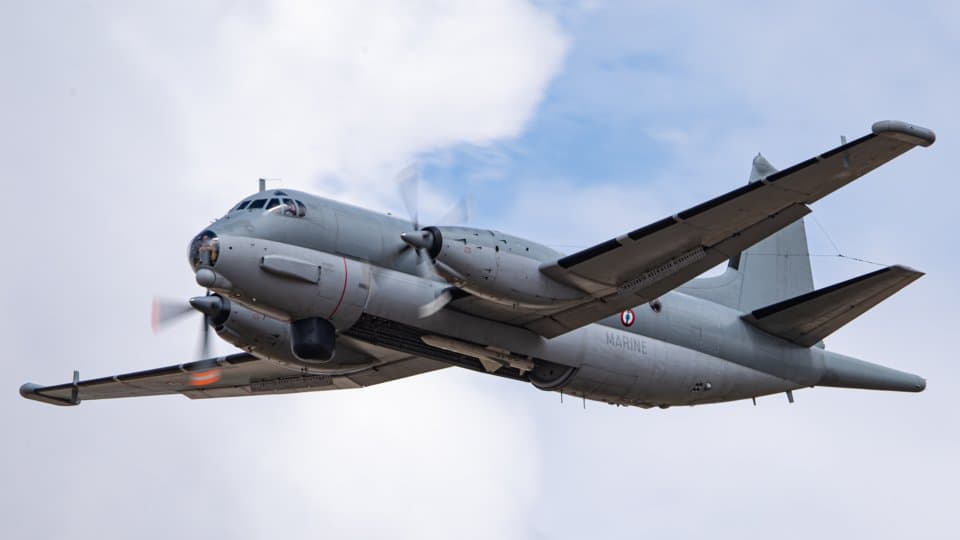

Credit
OTOMATICC · CC BY-SA 4.0 · Resized · CC BY-SA 4.0 · Source ↗ · Modified


Preparing your view.


At a glance
True scale
Side by side. From every angle. A human reference for perspective.
3.43 MB · Loads when you open it| Model | Length | Width / span | Height |
|---|---|---|---|
| Bréguet 1150 Atlantic | ≈ 31.62 m | ≈ 37.42 m (Width) | ≈ 10.89 m |
| CASA/IPTN CN-235 | ≈ 21.4 m | ≈ 25.81 m (Width) | ≈ 8.18 m |
Scaled uniformly to the sourced length of 31.62 m. The shape was turned square to the axes; the height was fitted to the sourced 10.89 m; the width was fitted to the sourced 37.42 m. Not an official model or a measured survey.
ForceTally · All rights reserved
Scaled uniformly to the sourced length of 21.4 m. The height was fitted to the sourced 8.18 m; the width was fitted to the sourced 25.81 m. Not an official model or a measured survey.
ForceTally · All rights reserved
The human reference is a generic 1.75 m figure. Models describe external size, not combat performance.
Measured figures
Atlantique 2 · Length
Single source31.62 m (103 ft 9 in)[source]
Configuration
| Specification | Bréguet 1150 Atlantic | CASA/IPTN CN-235 |
|---|---|---|
| Type | Maritime patrol aircraft[source] | Transport aircraft / maritime patrol aircraft[source] |
| Manufacturer | Breguet Aviation[source] | CASA IPTN[source] |
| Status | Active service[source] | In service[source] |
| Primary users | French Navy German Navy Italian Air Force Royal Netherlands Navy[source] |
CN235 · Length
21.40 m (70 ft 2.5 in)[source]
Empty; Atlantique 2 · Empty weight
Single sourceGross; Atlantique 2 · Gross weight
Single sourceMaximum take-off; Atlantique 2 · Max takeoff weight
Single source25,700 kg (56,659 lb)[source]
45,000 kg (99,208 lb)[source]
46,200 kg (101,854 lb)[source]
Empty; CN235 · Empty weight
Single sourceMaximum take-off; CN235 · Max takeoff weight
Single sourceCruise; Atlantique 2 · patrol speed
Single sourceMaximum; Atlantique 2 · Maximum speed
Single source648 km/h (403 mph, 350 kn)[source]
315 km/h (196 mph, 170 kn) patrol speed[source]
Cruise; CN235 · at 4,575 m (15,000 ft)
Single source450 km/h (286 mph, 248 kn) at 4,575 m (15,000 ft)[source]
Atlantique 2 · 2 × Rolls-Royce Tyne RTy.20 Mk 21 2-spool turboprop engines (6,100 shp) each (equivalent)
Single source2 × Rolls-Royce Tyne RTy.20 Mk 21 2-spool turboprop engines, 4,500 kW (6,100 shp) each (equivalent)[source]
CN235 · 2 × General Electric CT7 -9C3 turboprops each (take-off)
Single source2 × General Electric CT7 -9C3 turboprops , 1,305 kW (1,750 hp) each (take-off)[source]
Atlantique 2 · Endurance
Single source18 hours[source]
Bars compare reported quantities only. A larger figure does not make a system better; configurations and test conditions differ.
Turkish Air Force French Air and Space Force Indonesian Air Force Royal Malaysian Air Force[source] |
| Number built | 87 Atlantique 1 28 Atlantique 2[source] | 286 (IPTN 69 )[source] |
|---|
| Manufactured | 1961–1987[source] | 1983–present[source] |
|---|
| Introduction date | 1965[source] | 1 March 1988[source] |
|---|
| First flight | 21 October 1961[source] | 11 November 1983[source] |
|---|
| Capacity | 12 passengers or relief crew[source] | 51 passengers, 35 paratroops, 18 stretchers or four HCU-6/E pallets including one on the ramp and 6,000 kg (13,100 lb)[source] |
|---|
| Stall speed | 167 km/h (104 mph, 90 kn) flaps down[source] | 156 km/h (97 mph, 84 kn) (flaps down)[source] |
|---|
| Role | long-range maritime patrol aircraft[source] | medium-range twin-engined turboprop tactical transport aircraft[source] |
|---|
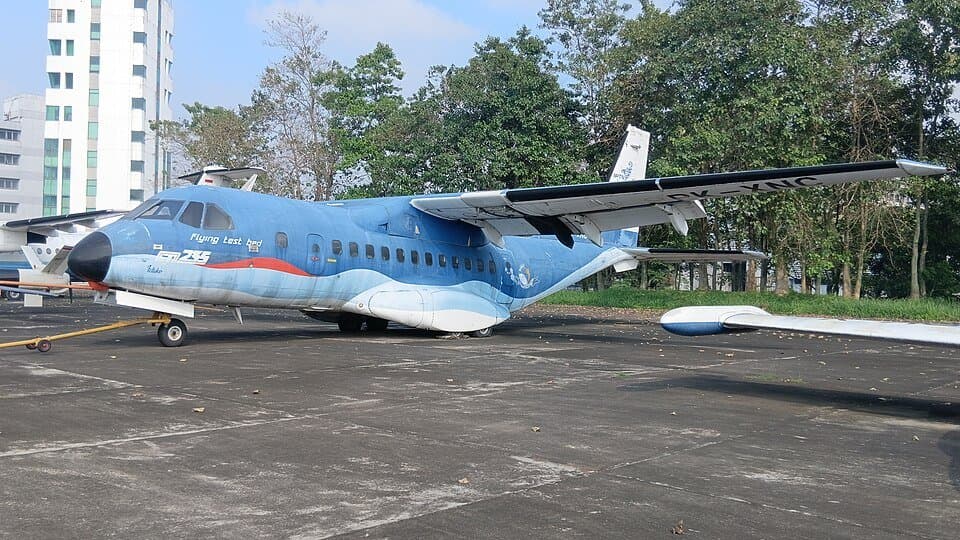
| Source measurement | By 2012, the Atlantique 2 had been rebranded as the ATL2, at which point France had a total of 22 in service. In 2012, 18 French Atlantiques were undergoing a series of upgrades to increase the type's effectiveness in two stages, Phase I addressing obsolescence issues and Phase II adding new capabilities. Also in 2012, a separate project was conducted to integrate the MU90 Impact torpedo. Aircraft that received these upgrades shall have an extended service life as well, enabling Atlantique operations to be extended to around 2032.[source]Bréguet 1150 Atlantic · Development; only the objects and conditions stated in this passage The Breguet Br.1150 Atlantic is a twin-engined, mid-winged monoplane with a "double-bubble" fuselage; the upper lobe comprising a pressurised crew compartment, and the lower lobe housing a 9 m (27 ft 6 in) long weapons bay, with sonobuoy tubes aft of the weapons bay. A radar scanner is housed in a retractable underfuselage radome , while a magnetic anomaly detector is housed in a tail boom. It is powered by a pair of Rolls-Royce Tyne turboprop engines. An all-aluminium structure is used throughout the Atlantic's airframe; corrosion is alleged to be a considerable problem due to environmental factors imposed by the maritime environment.[source]Bréguet 1150 Atlantic · Design; only the objects and conditions stated in this passage Power for the Atlantique 2 was served through 2 x Rolls-Royce Tyne RTy.20 Mk 21 series turboprop engines (twin shaft) developing 6,100 horsepower each.[source]Bréguet 1150 Atlantic · Variants / Atlantique 2; only the objects and conditions stated in this passage maximum speed of 400 miles per hour,[source]Bréguet 1150 Atlantic · Variants / Atlantique 2; only the objects and conditions stated in this passage cruising speed of 200 miles per hour,[source]Bréguet 1150 Atlantic · Variants / Atlantique 2; only the objects and conditions stated in this passage ferry range of 5,635 miles[source]Bréguet 1150 Atlantic · Variants / Atlantique 2; only the objects and conditions stated in this passage mission endurance time of up to 18 hours[source]Bréguet 1150 Atlantic · Variants / Atlantique 2; only the objects and conditions stated in this passage operations at altitudes from 100 feet up to 30,000 feet through use of a pressurized cabin and flight deck.[source]Bréguet 1150 Atlantic · Variants / Atlantique 2; only the objects and conditions stated in this passage Rate-of-climb at 2,900 feet per minute.[source]Bréguet 1150 Atlantic · Variants / Atlantique 2; only the objects and conditions stated in this passage French Navy French Naval Aviation – The original model was retired in 1996. Second generation Atlantique 2 in service. To be replaced by Airbus A321MPA .[source]Bréguet 1150 Atlantic · Operators / Current operators; only the objects and conditions stated in this passage 15 August 1973 - A Dutch marine surveillance Breguet serial 257 suffered a problem with the elevator and ditched at 1500 hrs 1.5 km off the beach at Wassenaar, Netherlands. All 14 crew survived. The aircraft remained afloat and was salvaged, but later scrapped.[source]Bréguet 1150 Atlantic · Accidents and incidents; only the objects and conditions stated in this passage 15 January 1981 – A Dutch Marine Atlantic SP-13A was shadowing the Soviet Navy aircraft carrier Kiev in foul weather, with 30 ft waves and blizzard conditions. The Atlantic's crew transmitted a Mayday at 09:58 after suffering control problems due to a control rod failure in the horizontal stabilizer. It was not able to maintain height and was forced to ditch 113 miles west of the Inner Hebrides about half an hour later. Nine survivors were rescued by an RAF Sea King helicopter about two hours after the crash. Three crew members drowned.[source]Bréguet 1150 Atlantic · Accidents and incidents; only the objects and conditions stated in this passage March 10 1981 – Shortly after taking off from Prince Said Ibrahim International Airport in Moroni, Comoros, on a maritime patrol mission over the Mozambique Channel, a French Navy Breguet 1150 Atlantic number 29 from Lann-Bihoué (France) flotilla 23F crashes into the mountain 15 kilometers (9.4 miles) from the airport, killing all 18 people on board. One engine caught fire shortly after take off.[source]Bréguet 1150 Atlantic · Accidents and incidents; only the objects and conditions stated in this passage 18 May 1986 – While flying in cloud, a French Navy Atlantic crashed into a mountain in Djibouti , killing all 19 people on board.[source]Bréguet 1150 Atlantic · Accidents and incidents; only the objects and conditions stated in this passage Capacity: 12 passengers or relief crew[source]Bréguet 1150 Atlantic · Specifications (Atlantique 2); only the objects and conditions stated in this passage Length: 31.62 m (103 ft 9 in)[source]Bréguet 1150 Atlantic · Specifications (Atlantique 2); only the objects and conditions stated in this passage Wingspan: 37.42 m (122 ft 9 in) including wingtip pods[source]Bréguet 1150 Atlantic · Specifications (Atlantique 2); only the objects and conditions stated in this passage Height: 10.89 m (35 ft 9 in)[source]Bréguet 1150 Atlantic · Specifications (Atlantique 2); only the objects and conditions stated in this passage Wing area: 120.34 m 2 (1,295.3 sq ft)[source]Bréguet 1150 Atlantic · Specifications (Atlantique 2); only the objects and conditions stated in this passage Empty weight: 25,700 kg (56,659 lb)[source]Bréguet 1150 Atlantic · Specifications (Atlantique 2); only the objects and conditions stated in this passage Gross weight: 45,000 kg (99,208 lb)[source]Bréguet 1150 Atlantic · Specifications (Atlantique 2); only the objects and conditions stated in this passage Max takeoff weight: 46,200 kg (101,854 lb)[source]Bréguet 1150 Atlantic · Specifications (Atlantique 2); only the objects and conditions stated in this passage Powerplant: 2 × Rolls-Royce Tyne RTy.20 Mk 21 2-spool turboprop engines, 4,500 kW (6,100 shp) each (equivalent)[source]Bréguet 1150 Atlantic · Specifications (Atlantique 2); only the objects and conditions stated in this passage Maximum speed: 648 km/h (403 mph, 350 kn)[source]Bréguet 1150 Atlantic · Specifications (Atlantique 2); only the objects and conditions stated in this passage Cruise speed: 315 km/h (196 mph, 170 kn) patrol speed[source]Bréguet 1150 Atlantic · Specifications (Atlantique 2); only the objects and conditions stated in this passage Stall speed: 167 km/h (104 mph, 90 kn) flaps down[source]Bréguet 1150 Atlantic · Specifications (Atlantique 2); only the objects and conditions stated in this passage Endurance: 18 hours[source]Bréguet 1150 Atlantic · Specifications (Atlantique 2); only the objects and conditions stated in this passage Service ceiling: 9,145 m (30,000 ft)[source]Bréguet 1150 Atlantic · Specifications (Atlantique 2); only the objects and conditions stated in this passage Rate of climb: 14.7 m/s (2,900 ft/min)[source]Bréguet 1150 Atlantic · Specifications (Atlantique 2); only the objects and conditions stated in this passage Up to 3,500 kg (7,700 lb), including torpedoes , depth charges , mines , anti-ship missiles , bombs and/or buoys[source]Bréguet 1150 Atlantic · Specifications (Atlantique 2); only the objects and conditions stated in this passage | The CN-235 has been conceived of during the late 1970s as a twin- turboprop powered transport capable of accommodating up to 35 passengers or various military payloads. It had been observed that there was a growing global market for such transports, while there was also a need in the domestic market. The Spanish aerospace company Construcciones Aeronáuticas SA (CASA) was keen to seek out international collaboration to develop this concept into a working programme, and promptly approach the newly formed Indonesian company IPTN (later known as Indonesian Aerospace or PT. Dirgantara Indonesia ). The company was offered an equal share in the venture along with technology transfer opportunities from CASA, and was presented as being mutually beneficial from an economic standpoint. Coincidentally, IPTN had been independently looking into possible configurations for such an aircraft prior to CASA's approach.[source]CASA/IPTN CN-235 · Design and development / Background; only the objects and conditions stated in this passage Its main cabin facilitated a four-abreast single-aisle seating arrangement, which could accommodate up to 44 passengers in the most dense seating configuration.[source]CASA/IPTN CN-235 · Design and development / Background; only the objects and conditions stated in this passage The third phase of development was to secure certification and to conduct the aircraft's first delivery to customers. In support of this effort, static and fatigue testing was conducted by the Serpong Laboratory for Structural Testing. By September 1984, orders for several dozen aircraft had been secured at a reported unit cost of $6m; many of these early orders for the type had originated from local customers within the two partner company's home nations.[source]CASA/IPTN CN-235 · Design and development / Into flight; only the objects and conditions stated in this passage The Royal Malaysian Air Force has operated a fleet of CN-235 transports. During early 2020, it was announced that several Malaysian aircraft would be converted into a maritime surveillance configuration using financial assistance from the United States. On 17 June 2022, the Royal Malaysian Air Force receive the first of three such modified CN235-220M MSA as part of the Malaysian Maritime Security Initiative program. |
|---|
| Country of origin | France[source] | — |
|---|
| National origin | — | Spain / Indonesia[source] |
|---|
| Variant | — | EADS HC-144 Ocean Sentry[source] |
|---|
| Developed into | — | EADS CASA C-295 Indonesian Aerospace N245[source] |
|---|
| Aspect ratio | — | 11.27:1[source] |
|---|
| Airfoil | — | NACA 65 3 -218[source] |
|---|
| Fuel capacity | — | 4150 kg[source] |
|---|
| Propellers | — | 4-bladed Hamilton Sundstrand 14RF Propeller[source] |
|---|
During 1992, Aerolíneas Argentinas , which was a subsidiary of Iberia at that time, ordered a pair of CN-235s to be operated by its own subsidiary, Austral . In August 2006, it was reported that several CASA CN-235-10 were in service with African airlines, including two operated by Safair and one with Tiko Air . Around 2007, Asian Spirit operated a lone CN-235-220 in the Philippines.[source]CASA/IPTN CN-235 · Operational history / Commercial airliner; only the objects and conditions stated in this passage
During 2015, Indonesian Aerospace announced that they were in the early stages of developing a new variant of the CN-235, the N245 , which has been specifically designed to perform civil operations and is able to carry up to 60 passengers. Alternatively also referred to as the CN-235NG , this variant is planned to be fully launched following the completion of the Indonesian Aerospace N219 project, at one point, it was expected to be fully certified sometime in 2019. A further derivative has been envisioned, referred to as the N-270 , it is a stretched version of the N245 and is planned to be able to carry up to 70–90 passengers; the original timeframe for development was set between 2019 and 2024.[source]CASA/IPTN CN-235 · Operational history / Commercial airliner; only the objects and conditions stated in this passage
Generally as series 10, but with GE CT7-9C engines in new composites nacelles; replaced Series 10 in 1988 from 31st production aircraft. Series 100 is Spanish-built, series 110 Indonesian-built, with improved electrical, warning and environmental systems.[source]CASA/IPTN CN-235 · Variants; only the objects and conditions stated in this passage
Modification of Series 200/220, offered by IPTN with new Honeywell avionics, ARL-2002 EW system and 16,800 kg/37,037 lb MTOW, to the Royal Australian Air Force to meet Project Air 5190 tactical airlift requirement, but was forced by financial constraints to withdraw in 1998.[source]CASA/IPTN CN-235 · Variants; only the objects and conditions stated in this passage
A light gunship modified with integrated weapons pylons to carry AGM-114 Hellfire missiles and 70 mm rockets ; it also has a side-mounted 30 mm cannon and a Synthetic aperture radar .[source]CASA/IPTN CN-235 · Variants; only the objects and conditions stated in this passage
The Royal Brunei Air Force operates one CN235-110M.[source]CASA/IPTN CN-235 · Operators / Military operators; only the objects and conditions stated in this passage
The Royal Saudi Air Force operates four CN235-10M, two of which are used for VIP purposes.[source]CASA/IPTN CN-235 · Operators / Military operators; only the objects and conditions stated in this passage
On 18 October 1992, Merpati Nusantara Airlines (Registration PK-MNN) CN-235-10 Flight 5601 crashed in Garut , Indonesia, killing all 31 people on board,[source]CASA/IPTN CN-235 · Notable accidents; only the objects and conditions stated in this passage
On 19 January 2001, a Turkish Air Force CN-235 training mission crashed near Kayseri after entering a spin from which recovery was not possible, killing all three people on board.[source]CASA/IPTN CN-235 · Notable accidents; only the objects and conditions stated in this passage
On 16 May 2001, a Turkish Air Force CN-235 crashed after the pilot lost control, killing all 34 people on board.[source]CASA/IPTN CN-235 · Notable accidents; only the objects and conditions stated in this passage
On 18 May 2001, a Turkish Navy CN-235 crashed after the pilot lost control after reaching an altitude of just 100 feet, killing all 4 people on board.[source]CASA/IPTN CN-235 · Notable accidents; only the objects and conditions stated in this passage
On 29 August 2001, Binter Mediterráneo Flight 8261 (Registration EC-FBC) crash-landed at Málaga , Spain, killing four of the 47 passengers and crew aboard. The aircraft was scrapped.[source]CASA/IPTN CN-235 · Notable accidents; only the objects and conditions stated in this passage
On 11 February 2013, a CN-235 crashed into a forest 45 km south of Monrovia , Liberia , 8 km to Roberts International Airport , killing 11 people amongst them Souleymane Kelefa Diallo , Guinea army chief.[source]CASA/IPTN CN-235 · Notable accidents; only the objects and conditions stated in this passage
On 1 August 2015 a CN-235-200M operated by the Colombian Air Force crashed in Cesar province, Colombia due to engine failure, killing 11 people.[source]CASA/IPTN CN-235 · Notable accidents; only the objects and conditions stated in this passage
Capacity: 51 passengers, 35 paratroops, 18 stretchers or four HCU-6/E pallets including one on the ramp and 6,000 kg (13,100 lb)[source]CASA/IPTN CN-235 · Specifications (CN235); only the objects and conditions stated in this passage
Length: 21.40 m (70 ft 2.5 in)[source]CASA/IPTN CN-235 · Specifications (CN235); only the objects and conditions stated in this passage
Wingspan: 25.81 m (84 ft 8 in)[source]CASA/IPTN CN-235 · Specifications (CN235); only the objects and conditions stated in this passage
Height: 8.18 m (26 ft 10 in)[source]CASA/IPTN CN-235 · Specifications (CN235); only the objects and conditions stated in this passage
Wing area: 59.10 m 2 (636.1 sq ft)[source]CASA/IPTN CN-235 · Specifications (CN235); only the objects and conditions stated in this passage
Empty weight: 9,800 kg (21,605 lb)[source]CASA/IPTN CN-235 · Specifications (CN235); only the objects and conditions stated in this passage
Max takeoff weight: 16,100 kg (35,420 lb)[source]CASA/IPTN CN-235 · Specifications (CN235); only the objects and conditions stated in this passage
Fuel capacity: 4150 kg[source]CASA/IPTN CN-235 · Specifications (CN235); only the objects and conditions stated in this passage
Powerplant: 2 × General Electric CT7 -9C3 turboprops , 1,305 kW (1,750 hp) each (take-off)[source]CASA/IPTN CN-235 · Specifications (CN235); only the objects and conditions stated in this passage
Cruise speed: 450 km/h (286 mph, 248 kn) at 4,575 m (15,000 ft)[source]CASA/IPTN CN-235 · Specifications (CN235); only the objects and conditions stated in this passage
Stall speed: 156 km/h (97 mph, 84 kn) (flaps down)[source]CASA/IPTN CN-235 · Specifications (CN235); only the objects and conditions stated in this passage
Range: 4,355 km (2,706 mi, 2,350 nmi)[source]CASA/IPTN CN-235 · Specifications (CN235); only the objects and conditions stated in this passage
Service ceiling: 9,100 m (30,000 ft)[source]CASA/IPTN CN-235 · Specifications (CN235); only the objects and conditions stated in this passage
Rate of climb: 7.8 m/s (1,780 ft/min)[source]CASA/IPTN CN-235 · Specifications (CN235); only the objects and conditions stated in this passage