

Credit
Sardaka · CC BY-SA 4.0 · Resized · CC BY-SA 4.0 · Source ↗ · Modified


Preparing your view.

At a glance
Measured figures
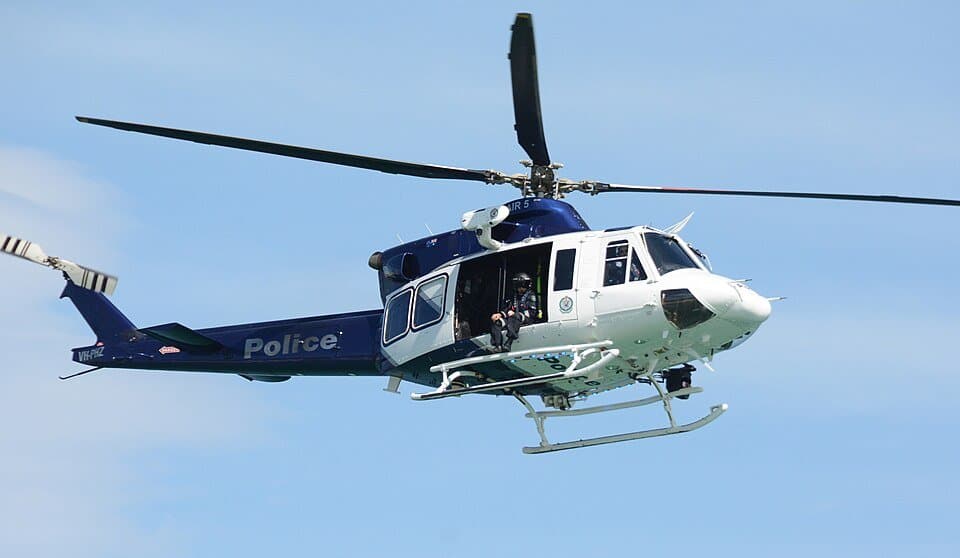
Bell 412EP · including rotors
Single source56 ft 1 in (17.09 m) including rotors[source]
Length
Single sourceConfiguration
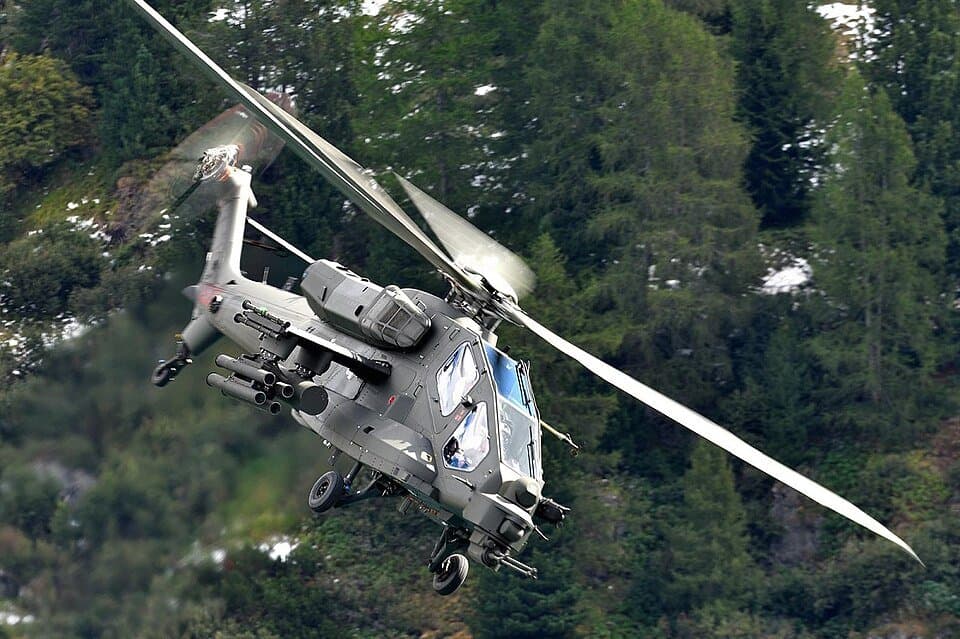
| Specification | Bell 412 | Leonardo Helicopters AW249 Fenice |
|---|---|---|
| Crew | one-two pilots[source] | two[source] |
| Type | Multipurpose utility helicopter[source] | Attack helicopter[source] |
| National origin | United States / Canada[source] | Italy[source] |
| Manufacturer | Bell Helicopter[source] | Leonardo |
17.63 m (57 ft 10 in)[source]
Wingspan
Single source14.60 m (47 ft 11 in)[source]
Empty; Bell 412EP · Empty weight
Single sourceMaximum take-off; Bell 412EP · Max takeoff weight
Single source6,789 lb (3,079 kg)[source]
11,900 lb (5,398 kg)[source]
Maximum take-off; Max takeoff weight
Single sourceOfficial specification · 59403073-05d2-0671-888c-08310f1f4385; 8,300 kg
Manufacturer claimCruise; Bell 412EP · Cruise speed
Single sourceMaximum; Bell 412EP · Maximum speed
Single source140 kn (160 mph, 260 km/h)[source]
122 kn (140 mph, 226 km/h)[source]
Cruise; Cruise speed
Single sourceMaximum; at maximum cruise power, with an average mission weight
Single sourceBell 412EP · 1 × Pratt & Whitney Canada PT6T-3D Twin-Pac or PT6T-3DF Twin-Pac coupled turboshaft engine - each, 1,250 shp (
Single source1 × Pratt & Whitney Canada PT6T-3D Twin-Pac or PT6T-3DF Twin-Pac coupled turboshaft engine - each, 1,250 shp (930 kW)[source]
2 × General Electric CT7 -8E6 turboshaft Max take-off power: 2,503 shp ( ) Max continuous power: 2,274 shp (
Single sourcePowerplant
Single source2 × General Electric CT7 -8E6 turboshaft Max take-off power: 2,503 shp (1,866 kW) Max continuous power: 2,274 shp (1,696 kW))[source]
at maximum take-off power, with an average mission weight
Single source4 hours 5 minutes (at maximum take-off power, with an average mission weight)[source]
Bars compare reported quantities only. A larger figure does not make a system better; configurations and test conditions differ.
| Primary users | Japan Ground Self Defence Force See Operators for others[source] | — |
|---|
| Number built | 1,300+[source] | 4 (early 2025)[source] |
|---|
| Manufactured | 1979–present[source] | — |
|---|
| Introduction date | 1981 ( 1981 )[source] | — |
|---|
| First flight | August 1979 ( 1979-08 )[source] | 12 August 2022[source] |
|---|
| Developed from | Bell 212[source] | — |
|---|
| Variant | Bell CH-146 Griffon[source] | — |
|---|
| Capacity | up to 13 passengers, maximum external load of almost 6,614 lb (3,000 kg)[source] | 2,800 kg (6,200 lb) (weapons)[source] |
|---|
| Fuselage length | 43 ft (13 m)[source] | — |
|---|
| Blade sections | root: Boeing VR-7; tip: Wortmann FX 71-H-080[source] | — |
|---|
| Main rotor area | 1,662 sq ft (154.4 m 2 )[source] | — |
|---|
| Power/mass | 0.2663 hp/lb (0.4378 kW/kg)[source] | — |
|---|
| Status | — | Under development[source] |
|---|
| Primary user | — | Italian Army Aviation[source] |
|---|
| Guns | — | Gatling gun Leonardo TM197B (with 3 × 20 mm barrels, Integrated Helmet Display System enslaved)[source] |
|---|
| Hardpoints | — | 6 (2 under each wing, 1 on the wingtip)[source] |
|---|
| Communications | — | Software defined radios (civil and military), Tactical Data Link 16. LTE Gateway for tactical data transfers, wide-band Datalink for UAV control (line of sight), IFF[source] |
|---|
| Rockets | — | Hydra 70 (launchers with 7 or 19 rockets, up to 4 launchers on the hardpoints under the wings)[source] |
|---|
| Missiles | — | Air-to-ground: Rafael Spike ER2 ,or Rafael Spike LR2 (launchers with 2 or 4 missiles each, up to 4 launchers on the hardpoints under the wings) Air-to-air missiles : likely MBDA Italia Fulgur (up to 2 launchers with two rails launching missiles, can be installed on the 6 hardpoints)[source] |
|---|
| Optics | — | observation and targeting system, pilot night vision system[source] |
|---|
| Electronic warfare | — | full EW suite with passive / active countermeasures, anti-jamming, anti GPS-spoofing[source] |
|---|
| Human-machine | — | helmet display system, enhanced human machine interface, battlefield management system, integrated mission system[source] |
|---|
| Screens | — | 2 multi-core touchscreen large area displays (situational awareness), 4 multi-core touchscreen enhanced display control units (controlling the aircraft systems)[source] |
|---|