



Preparing your view.

At a glance
Measured figures
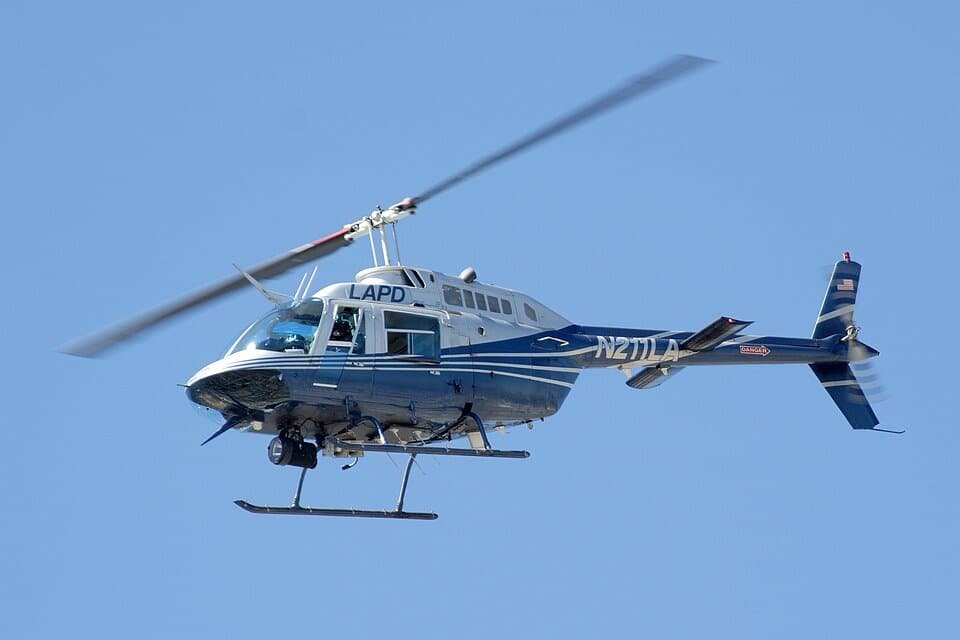
206B Jetranger II · including rotors
Single source38 ft 9.5 in (11.824 m) including rotors[source]
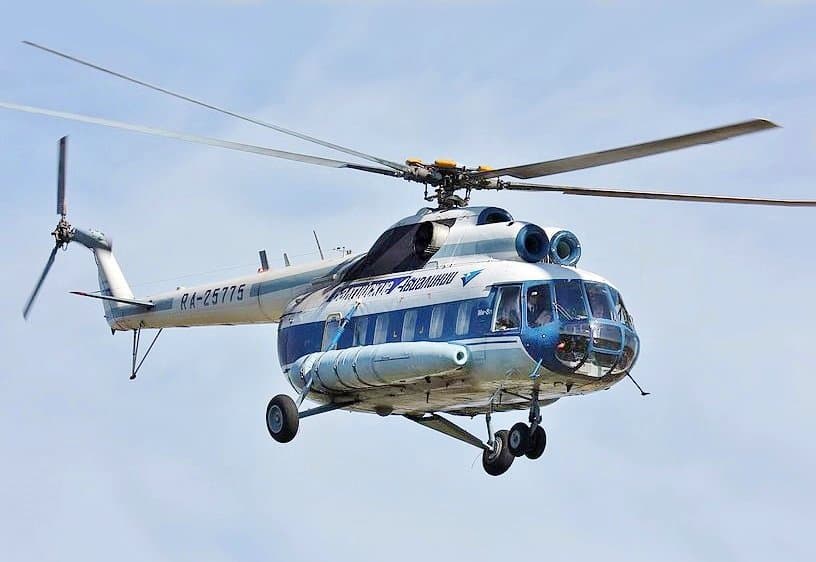
Mi-8MT · Length
Configuration
| Specification | Bell 206 | Mil Mi-8 |
|---|---|---|
| Type | Multipurpose utility helicopter[source] | Transport helicopter (also several armed versions)[source] |
| National origin | United States / Canada[source] | Soviet Union / Russia[source] |
| Manufacturer | Bell Helicopter[source] | Kazan Helicopter Plant Ulan-Ude Aviation Plant[source] |
| Status | In service[source] | In service |
18.4 m (60 ft 4 in)[source]
Cruise; 206B Jetranger II · at MTOW, 5,000 feet
Single sourceMaximum; 206B Jetranger II · at MTOW (sea level)
Single source122 kn (140 mph, 226 km/h) at MTOW (sea level)[source]
120 kn (140 mph, 220 km/h) at MTOW, 5,000 feet[source]
Cruise; Mi-8MT · Cruise speed
Single sourceMaximum; Mi-8MT · Maximum speed
Single source206B Jetranger II · at MTOW
Single source206B Jetranger II · cruise speed, no reserves
Single source337 nmi (388 mi, 624 km) at MTOW, 5,000 feet, cruise speed, no reserves[source]
Ferry; Mi-8MT · Ferry range
Single sourceMi-8MT · Range
Single source206B Jetranger II · 1,350 ft/min (
Single source1,350 ft/min (6.9 m/s)[source]
Bars compare reported quantities only. A larger figure does not make a system better; configurations and test conditions differ.
| Number built | 7,300[source] | >17,000 and production continues today; world's most-produced helicopter[source] |
|---|
| Manufactured | 1962–2017[source] | 1961–present[source] |
|---|
| Introduction date | 1967[source] | 1967[source] |
|---|
| First flight | December 8, 1962 (206) January 10, 1966 (206A)[source] | 7 July 1961[source] |
|---|
| Developed from | Bell YOH-4[source] | — |
|---|
| Variants | Bell OH-58 Kiowa Bell 407[source] | — |
|---|
| Developed into | Bell 400 TwinRanger[source] | Mil Mi-14 Mil Mi-24[source] |
|---|
| Capacity | 4 passengers[source] | 24 passengers or 12 stretchers and seat for one medical attendant or 4,000 kg (8,800 lb) on internal/external hardpoints[source] |
|---|
| Fuselage length | 31 ft 2 in (9.50 m)[source] | — |
|---|
| Interior dimensions | 7 ft 2 in (2.18 m) length, by 4 ft 2 in (1.27 m) width, by 4 ft 3 in (1.30 m) height, plus 16 ft 3 (453 L) baggage compartment[source] | — |
|---|
| Main rotor area | 873 sq ft (81.1 m 2 )[source] | 356 m 2 (3,830 sq ft)[source] |
|---|
| Blade section | – NACA 0012 mod (11.3%)[source] | NACA 23012[source] |
|---|
| Maximum speed at 5,000 ft | 116 kn (133 mph; 215 km/h) at MTOW[source] | — |
|---|
| Disk loading | 4 lb/sq ft (20 kg/m 2 )[source] | — |
|---|
| Power/mass | 0.09 hp/lb (0.15 kW/kg)[source] | — |
|---|
| Designer | — | Mil Moscow Helicopter Plant[source] |
|---|
| Primary user | — | Soviet Union (historical) Russia Approx. 80 other countries, see Operators below[source] |
|---|
| Variant | — | Mil Mi-8M/Mi-17[source] |
|---|
| Fuel capacity | — | 3,700 L (980 US gal; 810 imp gal)[source] |
|---|
| Hardpoints | — | 4,000 kg (8,818 lb) of disposable stores on six hardpoints , including 57 mm S-5 rockets , bombs, or 9M17 Phalanga ATGMs and one or two side-mounted PK machine guns[source] |
|---|
| Reported operators | — |
|
|---|
Maximum take-off; Mi-8MT · Max takeoff weight
Single source