



Preparing your view.

BHelicopters
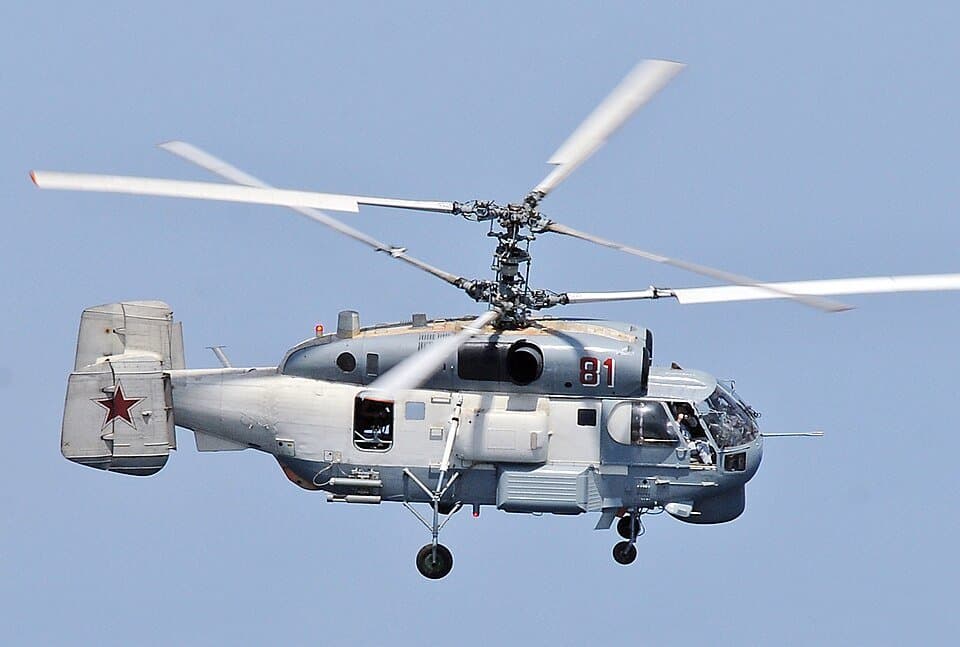
Anti-submarine warfare helicopter (Ka-27/Ka-28) Attack helicopter with transport capabilities (Ka-29) Civilian utility helicopter (Ka-32)
At a glance
Measured figures
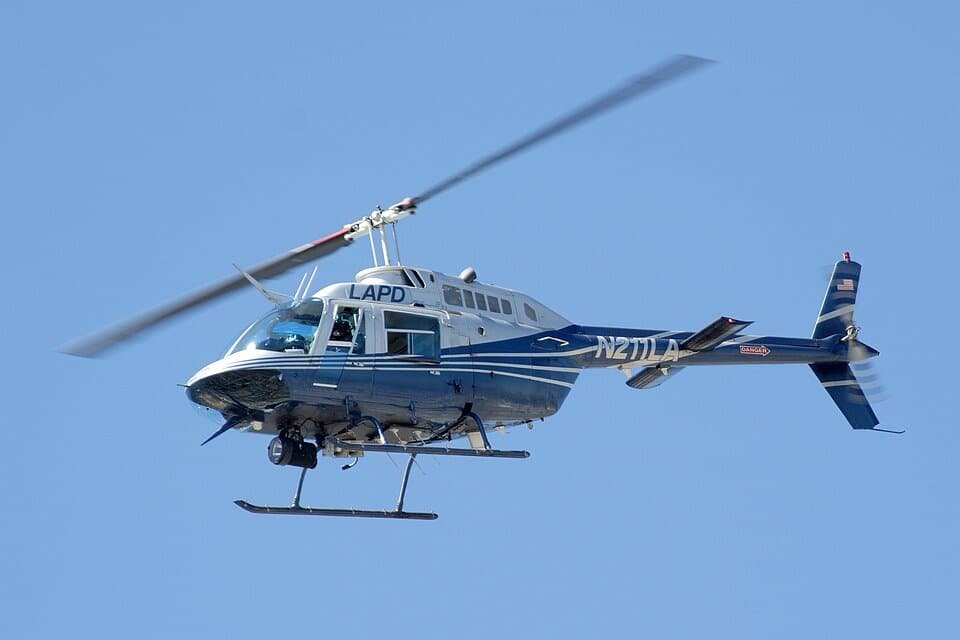
206B Jetranger II · including rotors
Single source38 ft 9.5 in (11.824 m) including rotors[source]
Ka-27 · Length
Configuration
| Specification | Bell 206 | Kamov Ka-27 |
|---|---|---|
| Type | Multipurpose utility helicopter[source] | Anti-submarine warfare helicopter (Ka-27/Ka-28) Attack helicopter with transport capabilities (Ka-29) Civilian utility helicopter (Ka-32)[source] |
| National origin | United States / Canada[source] | Soviet Union / Russia[source] |
| Manufacturer | Bell Helicopter[source] | Kamov[source] |
| Status | In service[source] |
11.3 m (37 ft 1 in)[source]
Cruise; 206B Jetranger II · at MTOW, 5,000 feet
Single sourceMaximum; 206B Jetranger II · at MTOW (sea level)
Single source122 kn (140 mph, 226 km/h) at MTOW (sea level)[source]
120 kn (140 mph, 220 km/h) at MTOW, 5,000 feet[source]
Cruise; Ka-27 · Cruise speed
Single sourceMaximum; Ka-27 · Maximum speed
Single source206B Jetranger II · 1,350 ft/min (
Single source1,350 ft/min (6.9 m/s)[source]
Bars compare reported quantities only. A larger figure does not make a system better; configurations and test conditions differ.
In service[source] |
| Number built | 7,300[source] | — |
|---|
| Manufactured | 1962–2017[source] | 1979–2010[source] |
|---|
| Introduction date | 1967[source] | 1982[source] |
|---|
| First flight | December 8, 1962 (206) January 10, 1966 (206A)[source] | 24 December 1973[source] |
|---|
| Developed from | Bell YOH-4[source] | Kamov Ka-25[source] |
|---|
| Variants | Bell OH-58 Kiowa Bell 407[source] | — |
|---|
| Developed into | Bell 400 TwinRanger[source] | — |
|---|
| Capacity | 4 passengers[source] | 4,000 kg (8,818 lb) payload (Ka-32), or up to 16 troops (Ka-29).[source] |
|---|
| Fuselage length | 31 ft 2 in (9.50 m)[source] | — |
|---|
| Interior dimensions | 7 ft 2 in (2.18 m) length, by 4 ft 2 in (1.27 m) width, by 4 ft 3 in (1.30 m) height, plus 16 ft 3 (453 L) baggage compartment[source] | — |
|---|
| Main rotor area | 873 sq ft (81.1 m 2 )[source] | 392.2 m 2 (4,222 sq ft) 3-bladed contra-rotating rotors[source] |
|---|
| Blade section | – NACA 0012 mod (11.3%)[source] | — |
|---|
| Maximum speed at 5,000 ft | 116 kn (133 mph; 215 km/h) at MTOW[source] | — |
|---|
| Disk loading | 4 lb/sq ft (20 kg/m 2 )[source] | — |
|---|
| Power/mass | 0.09 hp/lb (0.15 kW/kg)[source] | — |
|---|
| Role | family of two-bladed, single- and twin-engined helicopters ,[source] | military helicopter[source] |
|---|
| Source measurement | When the YOH-4A was eliminated by the Army, Bell went about marketing the aircraft. In addition to the image problem, the helicopter lacked cargo space and only provided cramped seating for three passengers. The solution was a redesigned fuselage, sleeker and aesthetically appealing, adding 16 ft 3 (0.45 m 3 ) of cargo space in the process. A Bell executive contributed to the redesign by drawing two lines on a sketch extending the fuselage to where it meets the tail. The redesign was designated Bell 206A, and Bell President Edwin J. Ducayet named it the JetRanger , denoting an evolution from the popular Model 47J Ranger .[source]Bell 206 · Development / JetRanger; only the objects and conditions stated in this passage The 206L LongRanger is a stretched variant with seating for seven. The fuselage, stretched a total of 30 inches (760 mm), adds two rear-facing seats between the front and rear seats. Since 1975, Bell has produced more than 1,700 LongRangers across all variants. In 1981, a military version, the 206L TexasRanger was released. The original 206L used an Allison 250 -C20R engine, and a series of model upgrades replaced this engine with more powerful versions; the 206L-1 used a 250-C28, and the 206L-3 and 206L-4 used the 250-C30P.[source]Bell 206 · Development / LongRanger; only the objects and conditions stated in this passage In both applications, the 250-C30P is derated from 650 hp for takeoff and 501 hp continuous. The 206L-3 is transmission-limited to 435 hp for take-off, and the 206L-4 is transmission-limited to 495 hp. The derating of the C30P produces an advantage in hot-day and high-altitude operations, as it can produce the rated horsepower at higher altitudes and temperatures where applications that use the maximum rating of the engine at sea level suffer accelerated performance deterioration with increases in temperature and altitude. The 206L-3 and L-4 have not been offered in a twin configuration under those model designations.[source]Bell 206 · Development / LongRanger; only the objects and conditions stated in this passage In 2007, Bell announced an upgrade program for the 206L-1 and 206L-3 designed to modify the aircraft to the 206L-4 configuration; modified aircraft are designated 206L-1+ and 206L-3+. Modifications include strengthened structural components (including a new tailboom), improved transmission, upgraded engine for the L-1, all of which result in a maximum gross weight increase of 300 pounds and increased performance.[source]Bell 206 · Development / LongRanger; only the objects and conditions stated in this passage The basic shape and design of the JetRanger remained unchanged since 1967, but Bell introduced the 206B JetRanger II in 1971. In 1977, the 206B-3 JetRanger III was introduced with its modified tail rotor and more powerful engine. The JetRanger is popular with news media for traffic and news reporting. The LongRanger is commonly used as an air ambulance and as a corporate transport. On September 1, 1982, pilots H. Ross Perot, Jr. and Jay Coburn departed Dallas, Texas in the " Spirit of Texas ", a Bell 206L-1 (N3911Z). They returned on 30 September, 29 days and 3 hours later, completing the first around-the-world helicopter flight.[source]Bell 206 · Operational history; only the objects and conditions stated in this passage On July 22, 1994, Ron Bower landed his 206B-3 (N206AJ) at Hurst, Texas , setting a new record for around-the-world flight by a helicopter. Bower had departed on June 24 and returned 24 days, 4 hours, 36 minutes and 24 seconds later, averaging 35.62 knots (40.99 mph; 65.97 km/h). Bower had added a 91-US-gallon (340 L) auxiliary fuel tank, which doubled the JetRanger III's range.[source]Bell 206 · Operational history; only the objects and conditions stated in this passage Upgraded Allison 250-C20J engine and added 2 inches (51 mm) to tail rotor diameter for yaw control.[source]Bell 206 · Variants / Civilian; only the objects and conditions stated in this passage 137 commercial Bell 206B-3s purchased in 1993 as the primary and instrument helicopter trainer for the US Army at Fort Rucker , Alabama. 35 in VFR configuration and 102 in IFR configuration. The US Army has 181 units as of 2026, of which 121 are in VFR configuration and 60 are in IFR configuration. All TH-67s display US registrations ("N" numbers) and are operated as public use aircraft.[source]Bell 206 · Variants / Military; only the objects and conditions stated in this passage Capacity: 4 passengers[source]Bell 206 · Specifications (206B Jetranger II); only the objects and conditions stated in this passage Length: 38 ft 9.5 in (11.824 m) including rotors[source]Bell 206 · Specifications (206B Jetranger II); only the objects and conditions stated in this passage Fuselage length: 31 ft 2 in (9.50 m)[source]Bell 206 · Specifications (206B Jetranger II); only the objects and conditions stated in this passage Height: 9 ft 6.5 in (2.908 m)[source]Bell 206 · Specifications (206B Jetranger II); only the objects and conditions stated in this passage Interior dimensions: 7 ft 2 in (2.18 m) length, by 4 ft 2 in (1.27 m) width, by 4 ft 3 in (1.30 m) height, plus 16 ft 3 (453 L) baggage compartment[source]Bell 206 · Specifications (206B Jetranger II); only the objects and conditions stated in this passage Empty weight: 1,455 lb (660 kg)[source]Bell 206 · Specifications (206B Jetranger II); only the objects and conditions stated in this passage Max takeoff weight: 3,200 lb (1,451 kg)[source]Bell 206 · Specifications (206B Jetranger II); only the objects and conditions stated in this passage Powerplant: 1 × Allison 250-C20 turboshaft engine, 400 hp (298 kW)[source]Bell 206 · Specifications (206B Jetranger II); only the objects and conditions stated in this passage Main rotor diameter: 33 ft 4 in (10.16 m)[source]Bell 206 · Specifications (206B Jetranger II); only the objects and conditions stated in this passage Main rotor area: 873 sq ft (81.1 m 2 )[source]Bell 206 · Specifications (206B Jetranger II); only the objects and conditions stated in this passage Maximum speed: 122 kn (140 mph, 226 km/h) at MTOW (sea level)[source]Bell 206 · Specifications (206B Jetranger II); only the objects and conditions stated in this passage Maximum speed at 5,000 ft: 116 kn (133 mph; 215 km/h) at MTOW[source]Bell 206 · Specifications (206B Jetranger II); only the objects and conditions stated in this passage Cruise speed: 120 kn (140 mph, 220 km/h) at MTOW, 5,000 feet[source]Bell 206 · Specifications (206B Jetranger II); only the objects and conditions stated in this passage Range: 337 nmi (388 mi, 624 km) at MTOW, 5,000 feet, cruise speed, no reserves[source]Bell 206 · Specifications (206B Jetranger II); only the objects and conditions stated in this passage Service ceiling: 20,000 ft (6,100 m) at MTOW[source]Bell 206 · Specifications (206B Jetranger II); only the objects and conditions stated in this passage Rate of climb: 1,350 ft/min (6.9 m/s)[source]Bell 206 · Specifications (206B Jetranger II); only the objects and conditions stated in this passage | The Ka-27PS search and rescue helicopter can carry 12 folding seats or four stretchers in its cabin, and is equipped with a 300 kg (660 lb) winch. Its fuel capacity of 3,450 litres (910 US gal; 760 imp gal) is greater than the 2,940-litre (780 US gal; 650 imp gal) capacity of the Ka-27PL.[source]Kamov Ka-27 · Design and development; only the objects and conditions stated in this passage Ka-32 variants, e.g. the Klimov-powered Ka-32A11BC, have been certified for commercial operations throughout the world, notably in Canada and Europe. The Ka-32 has been certified for the newer Klimov VK-2500 PS-02 engine.[source]Kamov Ka-27 · Design and development; only the objects and conditions stated in this passage The Ka-32A11BC features a high power-to-weight ratio and ease of handling, owing to its coaxial rotor design. The rotors' diameters are not restricted by the presence of a tail rotor and associated tail boom; this facilitates maneuvering near obstacles and helps assure exceptional accuracy when hovering in heavy smoke and dust conditions. The Ka-32A11BC may be equipped with the Bambi Bucket suspended fire-fighting system of up to five tons capacity. The service life has been extended to up to 32,000 flight hours.[source]Kamov Ka-27 · Operational history; only the objects and conditions stated in this passage In 2013, Russia tested the new Kamov Ka-27M with an active electronically scanned array radar. The basis of the modernization of the Ka-27M is installed on the helicopter airborne radar with an active phased array antenna FH-A. This radar is part of the command and tactical radar system that combines several other systems: acoustic, magnetometric, signals intelligence and radar. All the information on them is displayed on the display instrumentation.[source]Kamov Ka-27 · Operational history; only the objects and conditions stated in this passage |
|---|
| Primary users | — | Soviet Navy (historical) Russian Navy Ukrainian Navy Indian Navy[source] |
|---|
| Variant | — | Kamov Ka-31[source] |
|---|
| Origin reported by inventory | — | Soviet Union[source]Inventory Origin column; table 1, row 8, cell 2; revision 1373626114; retrieved 2026-10-01 |
|---|
Maximum take-off; Ka-27 · Max takeoff weight
Single sourceKa-27PS[source]Kamov Ka-27 · Variants / Military; only the objects and conditions stated in this passage
(Helix-D) Search and rescue helicopter, ASW equipment removed and winch fitted. Fitted with 300 kg (660 lb) rescue hoist and hooks under fuselage for loads up to 5,000 kg (11,000 lb).[source]Kamov Ka-27 · Variants / Military; only the objects and conditions stated in this passage
Armed version of the Ka-27PS.[source]Kamov Ka-27 · Variants / Military; only the objects and conditions stated in this passage
Ka-27M[source]Kamov Ka-27 · Variants / Military; only the objects and conditions stated in this passage
The latest modification of the helicopter, equipped with radar and tactical command systems that include the following systems: acoustic sensors, magnetometric sensors, signals intelligence, and FH-A radar with active phased array antenna. The radar is mounted under the fuselage and provides all-around vision in the search and detection of surface, air, and ground targets. Serial upgrading of Ka-27Ms to the level of combatant helicopters was planned to begin in 2014. By the end of 2016, 46 Ka-27PLs had been scheduled for modernization, commissioned by the Russian Navy. The first eight serial Ka-27M were transferred in December 2016. Mass production approved in June 2017 and started in early 2018. A new delivery of 5 helicopters arrived in October 2018. Half of the fleet is modernized as of December 2018. Variant reportely carried on modernized battlecruiser Admiral Nakhimov as of 2026[source]Kamov Ka-27 · Variants / Military; only the objects and conditions stated in this passage
(Helix-A) Export version of the Ka-27PL. Max takeoff weight increased to 12,000 kg (26,000 lb), as well max fuel and range also increased.[source]Kamov Ka-27 · Variants / Military; only the objects and conditions stated in this passage
(Helix-B) Assault transport armored helicopter, operated from amphibious landing ships or aircraft carriers, with accommodation for two pilots and 16 troops. Equipped with 4 suspensions to carry rockets, guns, bombs and anti-tank missiles. Production began circa 1984 and over 60 were produced. It entered Soviet service in 1987. Other provisions include a single four-barreled 7.62 mm machine gun or 30 mm Shipunov 2A42 . Currently under re-activation and upgrade with changed engines and installed modern arms and electronics, among others.[source]Kamov Ka-27 · Variants / Military; only the objects and conditions stated in this passage
Ka-32 Ka-32 pre-production prototype (1985): Exhibited at the 36th Paris Airshow in 1985 . Ka-32C (198x): Little-known custom version. Ka-32T (1987): (Helix-C) Utility transport helicopter, with accommodation for two crew and 16 passengers. Ka-32A (1990): Civil transport helicopter. Initial production version. Ka-32A1 (1994): Fire fighting helicopter, equipped with a helicopter bucket . Ka-32A2 (1994): Police version, equipped with two searchlights and a loudspeaker. Can carry 11 passengers. Ka-32A7 (1994): Armed version of the Ka-27PS. Can carry 13 passengers. Has provisions to carry 2 x GSh-23L 23mm cannons, B-8V-20 rocket pods, 2 x Kh-35 anti-ship missiles or Kh-25 air-to-air missiles. Ka-32A12 (1996): Swiss-registered and approved version. Ka-32A11BC (1997): Canadian, Chinese, European-certified version with Klimov TV3-117MA engines and Glass Cockpit. Used by Pegasus Air Services , Indonesia. Ka-32A11M (2012) Ka-32A4 (1999): Special search and rescue, salvage and evacuation version. Ka-32K (1991): Flying crane helicopter, fitted with a retractable gondola for a second pilot.[source]Kamov Ka-27 · Variants / Civil; only the objects and conditions stated in this passage
Ka-32M: Projected development with 1839kW TV3-117VMA-SB3 engines. Probably replaced by the Ka-32-10 project.[source]Kamov Ka-27 · Variants / Civil; only the objects and conditions stated in this passage
Korea Forest Service (29 in service)[source]Kamov Ka-27 · Operators / Military and government operators; only the objects and conditions stated in this passage
Capacity: 4,000 kg (8,818 lb) payload (Ka-32), or up to 16 troops (Ka-29).[source]Kamov Ka-27 · Specifications (Ka-27); only the objects and conditions stated in this passage
Length: 11.3 m (37 ft 1 in)[source]Kamov Ka-27 · Specifications (Ka-27); only the objects and conditions stated in this passage
Height: 5.5 m (18 ft 1 in)[source]Kamov Ka-27 · Specifications (Ka-27); only the objects and conditions stated in this passage
Empty weight: 6,500 kg (14,330 lb)[source]Kamov Ka-27 · Specifications (Ka-27); only the objects and conditions stated in this passage
Gross weight: 11,000 kg (24,251 lb)[source]Kamov Ka-27 · Specifications (Ka-27); only the objects and conditions stated in this passage
Max takeoff weight: 12,000 kg (26,455 lb)[source]Kamov Ka-27 · Specifications (Ka-27); only the objects and conditions stated in this passage
Powerplant: 2 × Isotov TV3-117V turboshaft engines, 1,660 kW (2,230 hp) each[source]Kamov Ka-27 · Specifications (Ka-27); only the objects and conditions stated in this passage
Main rotor diameter: 2 × 15.8 m (51 ft 10 in)[source]Kamov Ka-27 · Specifications (Ka-27); only the objects and conditions stated in this passage
Main rotor area: 392.2 m 2 (4,222 sq ft) 3-bladed contra-rotating rotors[source]Kamov Ka-27 · Specifications (Ka-27); only the objects and conditions stated in this passage
Maximum speed: 270 km/h (170 mph, 150 kn)[source]Kamov Ka-27 · Specifications (Ka-27); only the objects and conditions stated in this passage
Cruise speed: 205 km/h (127 mph, 111 kn)[source]Kamov Ka-27 · Specifications (Ka-27); only the objects and conditions stated in this passage
Range: 980 km (610 mi, 530 nmi)[source]Kamov Ka-27 · Specifications (Ka-27); only the objects and conditions stated in this passage
Service ceiling: 5,000 m (16,000 ft)[source]Kamov Ka-27 · Specifications (Ka-27); only the objects and conditions stated in this passage
1 × torpedoes ( AT-1M , VTT-1 , UMGT-1 Orlan , APR-2 Yastreb ) or 36 RGB-NM & RGB-NM-1 sonobuoys[source]Kamov Ka-27 · Specifications (Ka-27); only the objects and conditions stated in this passage
1 × 30 mm 2A42 cannon with 250 rounds (flexible semi-rigid mount, optional/removable with ammunition carried in cabin)[source]Kamov Ka-27 · Specifications (Ka-27); only the objects and conditions stated in this passage