
FORCETALLY
Loading the evidence…
Preparing your view.


Preparing your view.

BRadar & sensors
Measured figures
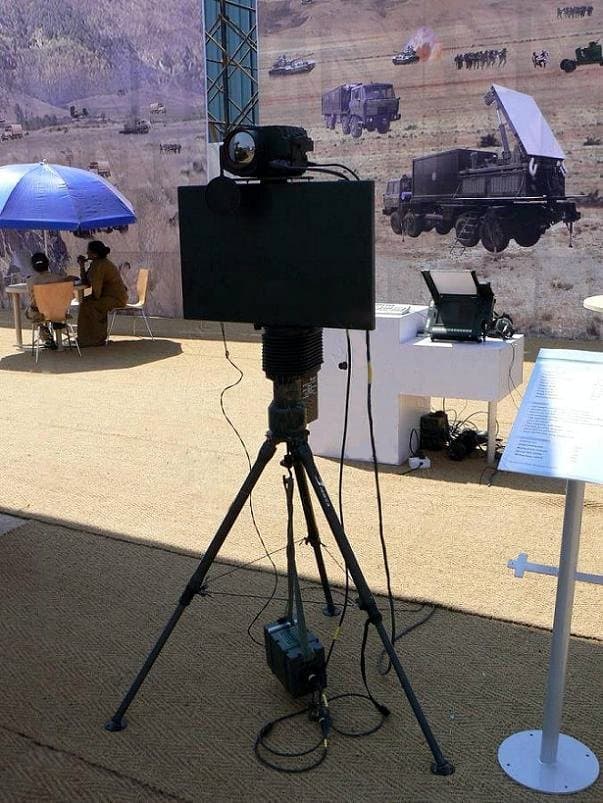
BEL Battle Field Surveillance Radar · around
Single sourcearound 30 kg[source]
Configuration
| Specification | AN/FPS-117 | BEL Battle Field Surveillance Radar |
|---|---|---|
| Speed | — | 0.9 m/s to 90 km/h[source]Source text · numeric interpretation needs review |
| Country of origin | United States[source] | India[source] |
| Manufacturer | Lockheed Martin[source] | Bharat Electronics Limited[source] |
| Introduced | 1980 ( 1980 )[source] | — |
Range · source measurement 1
Single sourceRange · source measurement 2
Single source290 mi; 250 nmi (470 km)[source]
Crawling Man
Single sourceGroup of people
Single sourceBars compare reported quantities only. A larger figure does not make a system better; configurations and test conditions differ.
| Type | Phased array Long-range radar[source] | — |
|---|
| PRF | 241 Pulses per second[source] | — |
|---|
| Pulsewidth | 51.2 / 409.6 μs[source] | — |
|---|
| RPM | 5–6 Rev/min[source] | — |
|---|
| Altitude | 100,000 ft (30.5 km)[source] | — |
|---|
| Azimuth | 0.18° at 160 mi; 130 nmi (250 km)[source] | 30-180°[source] |
|---|
| Elevation | −6° to +20°[source] | -40 to +15°[source] |
|---|
| Other names | Seek Igloo , AN/TPS-59 , AN/TPS-77 , RRP-117, AMES Type 92[source] | PJT-531[source] |
|---|
| Role | L-band active electronically scanned array (AESA) 3-dimensional air search radar first[source] | — |
|---|
| Source measurement | The AN/FPS-117 is an L-band active electronically scanned array (AESA) 3-dimensional air search radar first produced by GE Aerospace in 1980 and now part of Lockheed Martin . The system offers instrumented detection at ranges on the order of 200 to 250 nautical miles (370 to 460 km; 230 to 290 mi) and has a wide variety of interference and clutter rejection systems.[source]AN/FPS-117 · Lead; only the objects and conditions stated in this passage A key problem for radar systems of the 1950s was the introduction of the carcinotron , a microwave -producing tube that could be rapidly tuned across a wide bandwidth. Scanning rapidly, it appeared to be a constant radiator across an entire band, creating a powerful form of barrage jamming . To overcome this form of jamming, radars of the era were extremely powerful; the AMES Type 85 of the Royal Air Force sent out pulses of at least 8 MW in an effort to overcome the jammer's signal. Systems of such power have a number of practical downsides; cooling such a system is not a small endeavour, and the physical size of the transmitter tubes precludes it from being even partially mobile.[source]AN/FPS-117 · Development / Development of array antennas; only the objects and conditions stated in this passage The DEW line system across northern Canada and Alaska was built in the 1950s using 1950s-era AN/FPS-19 radars. These used two 500 kW magnetrons on huge always-turning parabolic antenna systems and rooms filled with tube-based electronics to drive them. The systems required constant maintenance by on-site staff and was enormously expensive to operate.[source]AN/FPS-117 · Development / Seek Igloo; only the objects and conditions stated in this passage Conversations among NORAD commands about the DEW line had been ongoing for some time, and the Royal Canadian Air Force was aware of the plans to convert to the new radars. As part of the 24-hour whirlwind Shamrock Summit in 1984, Canadian Prime Minister Brian Mulroney and US President Ronald Reagan signed an agreement to create the North Warning System to replace DEW. Implementation of the North Warning System has resulted in a reduction in operations and maintenance (O&M) spending by up to 50% compared to DEW. Shortly thereafter, the Air Force purchased another FPS-117 to replace the aging AN/FPS-67 radar at Berlin Tempelhof Airport .[source]AN/FPS-117 · Development / North Warning System and others; only the objects and conditions stated in this passage In the 1990s, the Marines sent out another contract for upgrades to their MIM-23 Hawk missile systems to allow them to attack short-range ballistic missiles. The TPS-59(V)3 modified the existing TPS-59 radar sets to provide much higher altitude coverage, up to 500,000 ft (150,000 m).[source]AN/FPS-117 · Development / AN/TPS-59; only the objects and conditions stated in this passage The system is a long range (up to 250 nautical miles or 460 kilometres), L-band pencil beam search radar with solid-state transmitters. The AESA principle uses active transmitters in each individual antenna in the 44-by-32 antenna array . The combined power of the entire array is about 25 kW, much lower than the multi-megawatt transmitters found in earlier radar designs. To compensate for the lower power, longer pulses are used. To extract accurate range information, the receivers employ pulse compression . The system design includes a redundant architecture with computer software remote controlled and monitored operations to minimize manning requirements. It is typically also equipped with an identification friend or foe system using a second antenna on top.[source]AN/FPS-117 · Description; only the objects and conditions stated in this passage The Air Force and the FAA also operate a limited number of AN/FPS-117 radars within the continental United States. The AN/FPS-117 radar is capable of randomly hopping among 18 channels in the 1215-1400 MHz band.[source]AN/FPS-117 · Description; only the objects and conditions stated in this passage | — |
|---|
| Designer | — | Electronics and Radar Development Establishment ( DRDO )[source] |
|---|
| No. built | — | 1400+[source] |
|---|
| Precision | — | ±20 meters (66 ft)[source] |
|---|
| Detection Range | — | Crawling man: 500 m Walking man: 2 km (1.2 mi) Group of people: 7 km (4.3 mi) Light vehicle: 10 km (6.2 mi) Heavy vehicle: 14 km (8.7 mi)[source] |
|---|
| Crawling man | — | 500 m[source] |
|---|
| Walking man | — | 2 km (1.2 mi)[source] |
|---|
| Group of people | — | 7 km (4.3 mi)[source] |
|---|
| Light vehicle | — | 10 km (6.2 mi)[source] |
|---|
| Heavy vehicle | — | 14 km (8.7 mi)[source] |
|---|
| Range accuracy | — | 20m rms[source] |
|---|
| Range resolution | — | 50 m[source] |
|---|
| Radar type | — | man portable 2D short-range battlefield and perimeter surveillance radar[source] |
|---|
| Reported operators |
|
|
|---|
Heavy Vehicles
Single sourceLight Vehicles
Single sourceWalking Man
Single sourceCrawling Man : 700 m (0.43 mi) Walking Man : 3 km (1.9 mi) Group of people : 7 km (4.3 mi) Light Vehicles : 10 km (6.2 mi) Heavy Vehicles : 14 km (8.7 mi)[source]