


Preparing your view.

At a glance
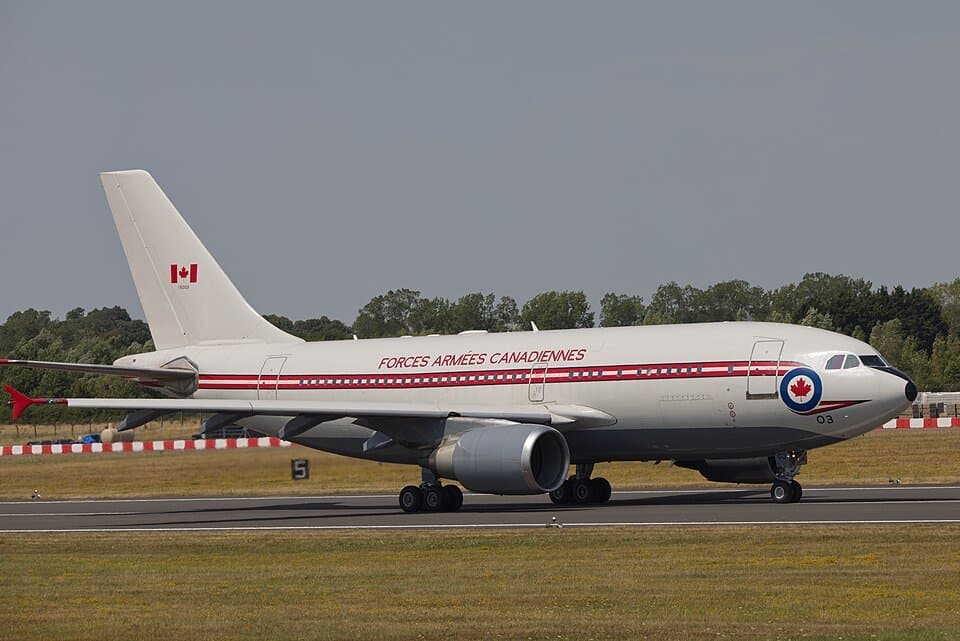
Airbus CC-150 Polarislarger figure on 1 of 4
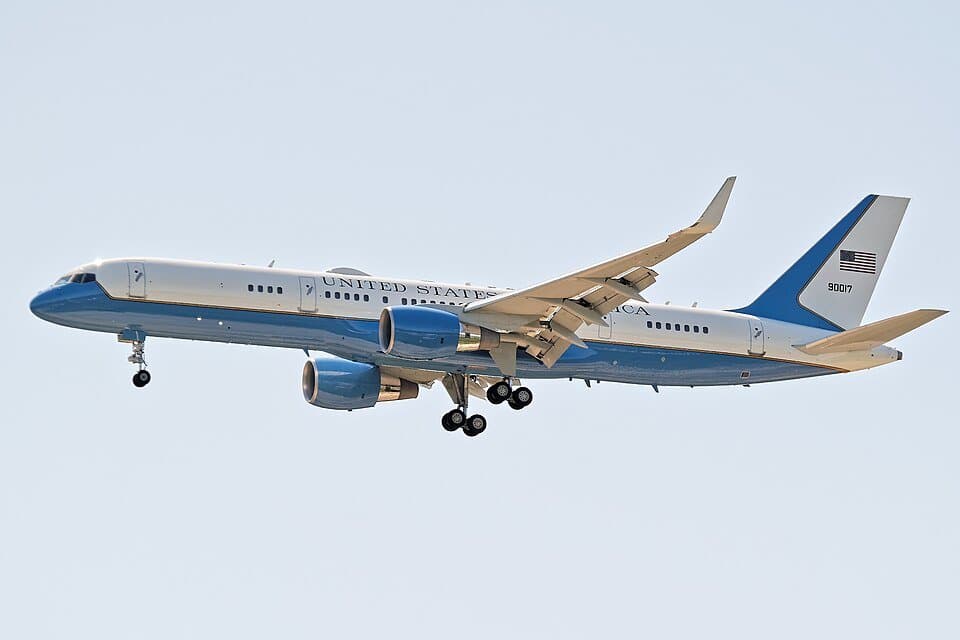
Boeing C-32larger figure on 3 of 4
Measured figures
Length
Single sourceCC-150 Polaris · Length
Single sourceConfiguration
| Specification | Airbus CC-150 Polaris | Boeing C-32 |
|---|---|---|
| Type | Strategic transport/VIP transport/tanker[source] | VIP transport, special operations[source] |
| Manufacturer | Airbus[source] | Boeing[source] |
| Status | Active service (Being Retired)[source] | In service[source] |
| Primary users | Canadian Forces Royal Canadian Air Force[source] | — |
Counts only measures both sources give with the same scope. A larger figure is not a better system.
46.66 m (153 ft 1 in)[source]
46.66 m[source]CC-150 Polaris
46.66 m[source]CC-150 Polaris
46.66 m[source]CC-150 Polaris
Length
Single source155 ft 3 in (47.32 m)[source]
Empty; Empty weight
Single sourceGross; CC-150 Polaris · Gross weight · Maximum gross weight
Single sourceGross; Gross weight
Single sourceMaximum take-off; Max takeoff weight
Single source80,000 kg (176,370 lb)[source]
157,000 kg (346,126 lb)[source]
157000 кг[source]
157,000 kg[source]CC-150 Polaris · Maximum gross weight
157,000 kg[source]CC-150 Polaris · Maximum gross weight
157,000 kg[source]CC-150 Polaris · Maximum gross weight
Empty; OWE
Single sourceMaximum take-off; MTOW
Single source2 × General Electric CF6-80C2A2 high bypass turbofan engines thrust each
Single source2 × General Electric CF6-80C2A2 high bypass turbofan engines, 220 kN (50,000 lbf) thrust each[source]
2 × Pratt & Whitney PW2000 -40 turbofan engines thrust each
Single source2 × Pratt & Whitney PW2000 -40 turbofan engines, 40,100 lbf (178 kN) thrust each[source]
Wing area
Single source185.25 sq ft (17.210 m 2 )[source]
Bars compare reported quantities only. A larger figure does not make a system better; configurations and test conditions differ.
| Number built |
|---|
5 (all converted from Airbus A310-300)[source] |
C-32A: 8 (4 acknowledged) C-32B: 2[source] |
| Introduction date | 1992[source] | June 1998[source] |
|---|
| Retired | 2023 (CC150T 15003), 2025 (CC150 15001)[source] | — |
|---|
| Developed from | Airbus A310 MRTT[source] | Boeing 757[source] |
|---|
| Successors | Airbus CC-330 Husky[source] | — |
|---|
| Capacity | 194 passengers (up to) or 33,000 kg (73,000 lb) payload[source] | 45[source] |
|---|
| Source measurement | In 2008, two of the five CC-150s were converted to air-to-air refuelling tankers with a new military mission avionics package for the CF-18 fleet as part of the Multi Role Tanker Transport (MRTT) program. The Polaris tankers are capable of ferrying a flight of four CF-18 Hornets non-stop across the Atlantic Ocean, off-loading 80,000 pounds of fuel to the receiving aircraft over a 2,500 nautical mile (4,630 km) leg. The MRTT program was initiated because of a German Air Force requirement and provided a cost-effective solution for the Canadian Forces. The converted aircraft have been designated CC-150T . The tankers have hose-drogue pods under the wings.[source]Airbus CC-150 Polaris · Design and development / Tanker conversion; only the objects and conditions stated in this passage The RCAF uses converted C-130s , RCAF designation CC-130H(T), for tactical air-to-air refuelling but is limited when deploying CF-18s overseas, as they are better served by a strategic air-to-air refuelling platform. As a result of the CC-150's MRTT conversion, Canada regained its strategic air-to-air refuelling capability, lost when the final tanker-configured CC-137s were retired in 1997 (13703 & 13704 were modified with Beech refuelling kits in mid-1972 in support of the CF-5 tactical fighter).[source]Airbus CC-150 Polaris · Design and development / Tanker conversion; only the objects and conditions stated in this passage The five CC-150s are operated by 437 Transport Squadron at CFB Trenton , Ontario . They served in United Nations, Red Cross and NATO initiatives, including operations in Afghanistan.[source]Airbus CC-150 Polaris · Operational history; only the objects and conditions stated in this passage In 2011, two CC-150T air-to-air refuelling tankers were deployed to support Canadian CF-18 fighter jets enforcing the no-fly zone over Libya under Operation Mobile and Operation Unified Protector .[source]Airbus CC-150 Polaris · Operational history; only the objects and conditions stated in this passage The call sign of the VIP-configured CC-150 is known officially as CAN Force One. The decision to outfit one of the five CC-150s as a VIP transport intended for use by the Prime Minister of Canada , made while Brian Mulroney held office, was politically controversial. The $56 million in upgrades ($3 million of that went towards a private compartment with a dining room, entertainment area, fold-out beds and a shower) were criticized as a needless extravagance during a time of government budgetary challenges by then- Leader of the Opposition Jean Chrétien , who labelled the aircraft a "flying Taj Mahal ". Chrétien became Prime Minister soon thereafter and tried and failed to sell the aircraft; he refused to use the CC-150 during his ensuing 11 years in office. The interior was downgraded to a smaller, less lavish VIP cabin and the aircraft offered limited communications capability.[source]Airbus CC-150 Polaris · Operational history / Use as VIP transport; only the objects and conditions stated in this passage In recent years, various mechanical problems have occurred. In October 2016, a flap issue forced the aircraft to return to Ottawa 30 minutes after takeoff while Trudeau was en route to Belgium to sign the Canada Europe free trade deal. In March 2018, Prime Minister Trudeau's trip to India was delayed because of a mechanical issue during a refuelling stop in Rome.[source]Airbus CC-150 Polaris · Operational history / Use as VIP transport; only the objects and conditions stated in this passage In 2021 the Government of Canada began an effort to replace all five CC-150 Polaris aircraft. The Polaris are over 30 years old with lifespan set to end in 2027. The replacement tender is expected to cost US$5 billion. Early bid candidates included the Airbus A330 MRTT and the Boeing KC-46 , but the latter has since been dropped. On 14 July 2022, Canada announced that it has finalized a contract to acquire two A330-200 aircraft as the first two aircraft for the RCAF that will provide a strategic transport and air-to-air refuelling role—currently fulfilled by the fleet of five CC-150 Polaris aircraft—as part of the Strategic Tanker Transport Capability (STTC) project. The two A330 aircraft are former civilian airliners owned by International Airfinance Corporation . The new fleet will include four new and five used aircraft that are being outfitted to feature the same capabilities.[source]Airbus CC-150 Polaris · Operational history / Replacement; only the objects and conditions stated in this passage Royal Canadian Air Force (4) - 2 CC-150T and 2 CC-150 Polaris 437 Transport Squadron[source]Airbus CC-150 Polaris · Operators; only the objects and conditions stated in this passage Capacity: 194 passengers (up to) or 33,000 kg (73,000 lb) payload[source]Airbus CC-150 Polaris · Specifications; only the objects and conditions stated in this passage Length: 46.66 m (153 ft 1 in)[source]Airbus CC-150 Polaris · Specifications; only the objects and conditions stated in this passage Wingspan: 43.9 m (144 ft 0 in)[source]Airbus CC-150 Polaris · Specifications; only the objects and conditions stated in this passage Height: 15.8 m (51 ft 10 in)[source]Airbus CC-150 Polaris · Specifications; only the objects and conditions stated in this passage Empty weight: 80,000 kg (176,370 lb)[source]Airbus CC-150 Polaris · Specifications; only the objects and conditions stated in this passage Gross weight: 157,000 kg (346,126 lb)[source]Airbus CC-150 Polaris · Specifications; only the objects and conditions stated in this passage Powerplant: 2 × General Electric CF6-80C2A2 high bypass turbofan engines, 220 kN (50,000 lbf) thrust each[source]Airbus CC-150 Polaris · Specifications; only the objects and conditions stated in this passage Range: 9,600 km (6,000 mi, 5,200 nmi)[source]Airbus CC-150 Polaris · Specifications; only the objects and conditions stated in this passage Service ceiling: 12,500 m (41,000 ft)[source]Airbus CC-150 Polaris · Specifications; only the objects and conditions stated in this passage | — |
|---|
| Country of origin | France[source]Inventory Origin column; table 1, row 6, cell 3; revision 1374787326 | — |
|---|
| Origin reported by inventory | Multinational[source]Inventory Origin column; table 1, row 15, cell 2; revision 1376991819 | — |
|---|
| National origin | — | United States[source] |
|---|
| Primary user | — | United States Air Force[source] |
|---|
| Fuel capacity | — | 13,334 US gal (11,103 imp gal; 50,475 L) with auxiliary tanks in fwd and aft cargo holds[source] |
|---|
| Maximum zero-fuel weight | — | 186,000 lb (84,368 kg) MZFW[source] |
|---|
| Maximum landing weight | — | 210,000 lb (95,254 kg) MLW[source] |
|---|
| Approach speed | — | 137 kn (158 mph; 254 km/h)[source] |
|---|
| Initial cruising height | — | 35,400 ft (10,790 m)[source] |
|---|
| Wing loading | — | 127.88 lb/sq ft (624.4 kg/m 2 )[source] |
|---|
| Thrust/weight | — | 0.314[source] |
|---|
| Take-off field length | — | 7,800 ft (2,377 m) at sea level 29 °C (84 °F)[source] |
|---|
| Landing field length | — | 5,100 ft (1,554 m) at MLW[source] |
|---|