


Preparing your view.


At a glance
Measured figures
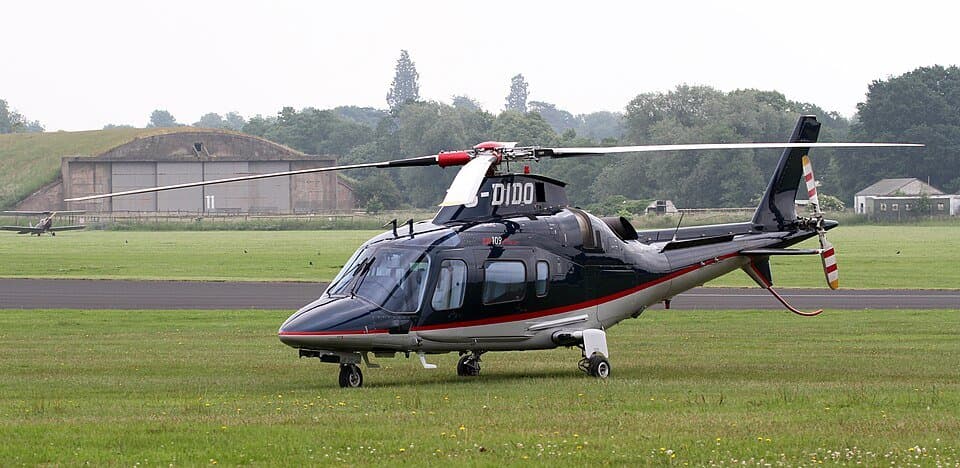
AW109 Power with PW206C · fuselage
Single source11.448 m (37 ft 7 in) fuselage[source]
Configuration
| Specification | AgustaWestland AW109 | Bell 206 |
|---|---|---|
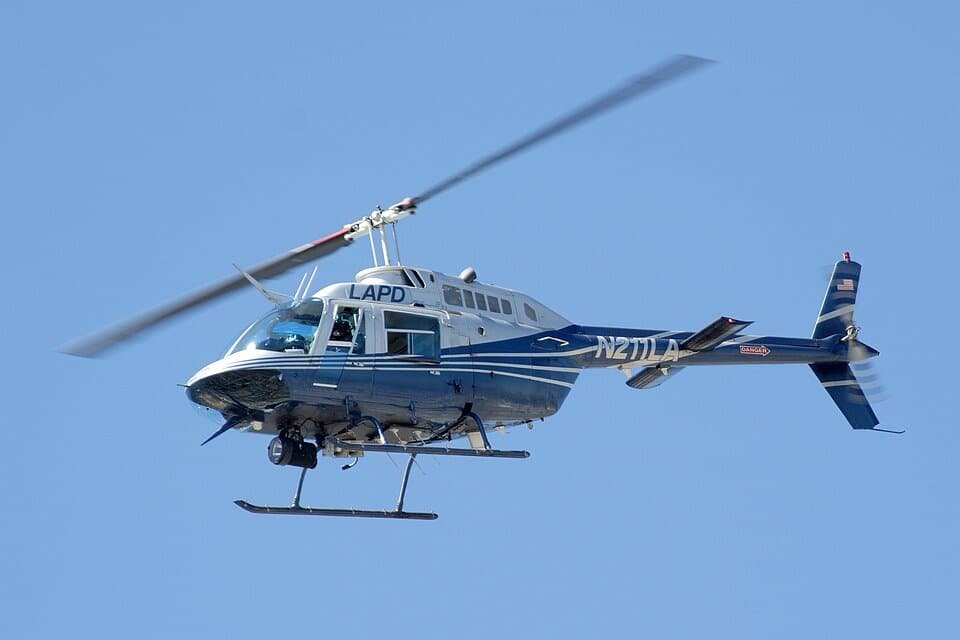
| Type | Search and rescue / utility helicopter[source] | Multipurpose utility helicopter[source] |
| Manufacturer | Agusta AgustaWestland Leonardo[source] | Bell Helicopter[source] |
| Status | In production[source] | In service[source] |
| Primary users | Italian Army Rega (Swiss Air Rescue) South African Air Force Royal New Zealand Air Force[source] |
206B Jetranger II · including rotors
38 ft 9.5 in (11.824 m) including rotors[source]
Empty; AW109 Power with PW206C · Empty weight
Single sourceMaximum take-off; AW109 Power with PW206C · Max takeoff weight
Single source1,590 kg (3,505 lb)[source]
2,850 kg (6,283 lb)[source]
Empty; 206B Jetranger II · Empty weight
Single sourceMaximum take-off; 206B Jetranger II · Max takeoff weight
Single sourceCruise; AW109 Power with PW206C · Cruise speed
Single sourceMaximum; AW109 Power with PW206C · Maximum speed
Single source311 km/h (193 mph, 168 kn)[source]
285 km/h (177 mph, 154 kn)[source]
Cruise; 206B Jetranger II · at MTOW, 5,000 feet
Single sourceMaximum; 206B Jetranger II · at MTOW (sea level)
Single sourceAW109 Power with PW206C · 2 × Pratt & Whitney Canada PW206C Turboshaft engine each
Single source2 × Pratt & Whitney Canada PW206C Turboshaft engine, 418 kW (560 hp) each[source]
206B Jetranger II · 1 × Allison 250-C20 turboshaft engine
Single source1 × Allison 250-C20 turboshaft engine, 400 hp (298 kW)[source]
Bars compare reported quantities only. A larger figure does not make a system better; configurations and test conditions differ.
| — |
| Manufactured | 1971–present[source] | 1962–2017[source] |
|---|
| Introduction date | 1976[source] | 1967[source] |
|---|
| First flight | 4 August 1971 ( 1971-08-04 )[source] | December 8, 1962 (206) January 10, 1966 (206A)[source] |
|---|
| Variant | AgustaWestland AW109S Grand[source] | — |
|---|
| Developed into | AgustaWestland AW119 Koala[source] | Bell 400 TwinRanger[source] |
|---|
| Capacity | 6 or 7 passengers[source] | 4 passengers[source] |
|---|
| Never exceed speed | 311 km/h (193 mph, 168 kn)[source] | — |
|---|
| Role | lightweight, twin-engine, eight-seat multi-purpose helicopter[source] | family of two-bladed, single- and twin-engined helicopters ,[source] |
|---|
| Source measurement | Optional mission equipment for the AW109 has included dual controls, a rotor brake, windshield wipers, a fixed cargo hook, snow skis, external loudspeakers , wire-strike protection system, engine particle separator, engine compartment fire extinguishers, datalink , and rappelling fittings. A range of armaments can be installed upon the AW109, including pintle -mounted machine guns , machine gun pods , 20mm cannons , rocket pods, anti-tank missiles and air-to-air missiles. Those AW109s operated by the U.S. Coast Guard , later designated as MH-68A , had the following equipment installed: a rescue hoist, emergency floats, FLIR , Spectrolab NightSun search light, a 7.62 mm M240D machine gun and a Barrett M107 semi-automatic 12.7 mm (.50 caliber) anti-material rifle with laser sight.[source]AgustaWestland AW109 · Design; only the objects and conditions stated in this passage During 1982, the Argentine Army Aviation deployed three A109As to the Falkland Islands during the Falklands War . They operated with the helicopter fleet (9 UH-1H, 2 CH-47C and 2 Pumas) in reconnaissance and liaison roles. One of the helicopters was destroyed on the ground by a British Harrier attack; the others were captured and sent to Europe aboard HMS Fearless . The British Army Air Corps decided to use those helicopters in domestic operations (being flown by 8 Flight AAC to support SAS regiment deployments in the UK), alongside two additional A109 which were purchased later following favorable use of the first two; all were retired in 2009. The improved AW109E and SP – GrandNew versions were operated by No. 32 Squadron of the Royal Air Force to transport Government ministers, senior military personnel, and members of the British royal family .[source]AgustaWestland AW109 · Operational history; only the objects and conditions stated in this passage During August 2008, Scott Kasprowicz and Steve Sheik broke the round-the-world speed record using a factory-standard AgustaWestland AW109S Grand , with a time of 11 days, 7 hours and 2 minutes. The AW109S Grand is also recorded as being the fastest helicopter from New York to Los Angeles .[source]AgustaWestland AW109 · Operational history; only the objects and conditions stated in this passage On 17 June 2000 accident involving an Agusta A109E Power air ambulance (registration G-TVAA). At about 300 feet, a bang from the gearbox occurred, followed by an immediate near-loss of control. The pilot performed a forced autorotation into a field near Arborfield Cross, Berkshire, resulting in substantial damage to the aircraft but only minor injuries. The bang and loss of control resulted from the fracture of the lower swash plate scissors link. Investigators from the Air Accidents Investigation Branch determined that the link had been incorrectly reassembled by maintenance personnel just 3 hours and 10 minutes (or one day) before the flight. This failure severed the link between the rotating controls and the main rotor blades.[source]AgustaWestland AW109 · Accidents; only the objects and conditions stated in this passage On 24 December 2018 ( 2018-12-24 ) : in the 2018 Puebla helicopter crash , an AW109 taking off from an airport on the outskirts of Puebla on a flight to Mexico City crashed about 3.5 miles north of the airport. Governor Martha Érika Alonso and former Governor Rafael Moreno Valle Rosas died in this incident.[source]AgustaWestland AW109 · Accidents; only the objects and conditions stated in this passage Capacity: 6 or 7 passengers[source]AgustaWestland AW109 · Specifications (AW109 Power with PW206C) 2850 Kilo version; only the objects and conditions stated in this passage Length: 11.448 m (37 ft 7 in) fuselage[source]AgustaWestland AW109 · Specifications (AW109 Power with PW206C) 2850 Kilo version; only the objects and conditions stated in this passage Height: 3.50 m (11 ft 6 in)[source]AgustaWestland AW109 · Specifications (AW109 Power with PW206C) 2850 Kilo version; only the objects and conditions stated in this passage Empty weight: 1,590 kg (3,505 lb)[source]AgustaWestland AW109 · Specifications (AW109 Power with PW206C) 2850 Kilo version; only the objects and conditions stated in this passage Max takeoff weight: 2,850 kg (6,283 lb)[source]AgustaWestland AW109 · Specifications (AW109 Power with PW206C) 2850 Kilo version; only the objects and conditions stated in this passage Powerplant: 2 × Pratt & Whitney Canada PW206C Turboshaft engine, 418 kW (560 hp) each[source]AgustaWestland AW109 · Specifications (AW109 Power with PW206C) 2850 Kilo version; only the objects and conditions stated in this passage Main rotor diameter: 11.00 m (36 ft 1 in)[source]AgustaWestland AW109 · Specifications (AW109 Power with PW206C) 2850 Kilo version; only the objects and conditions stated in this passage Maximum speed: 311 km/h (193 mph, 168 kn)[source]AgustaWestland AW109 · Specifications (AW109 Power with PW206C) 2850 Kilo version; only the objects and conditions stated in this passage Cruise speed: 285 km/h (177 mph, 154 kn)[source]AgustaWestland AW109 · Specifications (AW109 Power with PW206C) 2850 Kilo version; only the objects and conditions stated in this passage Never exceed speed : 311 km/h (193 mph, 168 kn)[source]AgustaWestland AW109 · Specifications (AW109 Power with PW206C) 2850 Kilo version; only the objects and conditions stated in this passage Ferry range: 932 km (579 mi, 503 nmi)[source]AgustaWestland AW109 · Specifications (AW109 Power with PW206C) 2850 Kilo version; only the objects and conditions stated in this passage Rate of climb: 9.8 m/s (1,930 ft/min)[source]AgustaWestland AW109 · Specifications (AW109 Power with PW206C) 2850 Kilo version; only the objects and conditions stated in this passage | When the YOH-4A was eliminated by the Army, Bell went about marketing the aircraft. In addition to the image problem, the helicopter lacked cargo space and only provided cramped seating for three passengers. The solution was a redesigned fuselage, sleeker and aesthetically appealing, adding 16 ft 3 (0.45 m 3 ) of cargo space in the process. A Bell executive contributed to the redesign by drawing two lines on a sketch extending the fuselage to where it meets the tail. The redesign was designated Bell 206A, and Bell President Edwin J. Ducayet named it the JetRanger , denoting an evolution from the popular Model 47J Ranger .[source]Bell 206 · Development / JetRanger; only the objects and conditions stated in this passage The 206L LongRanger is a stretched variant with seating for seven. The fuselage, stretched a total of 30 inches (760 mm), adds two rear-facing seats between the front and rear seats. Since 1975, Bell has produced more than 1,700 LongRangers across all variants. In 1981, a military version, the 206L TexasRanger was released. The original 206L used an Allison 250 -C20R engine, and a series of model upgrades replaced this engine with more powerful versions; the 206L-1 used a 250-C28, and the 206L-3 and 206L-4 used the 250-C30P.[source]Bell 206 · Development / LongRanger; only the objects and conditions stated in this passage In both applications, the 250-C30P is derated from 650 hp for takeoff and 501 hp continuous. The 206L-3 is transmission-limited to 435 hp for take-off, and the 206L-4 is transmission-limited to 495 hp. The derating of the C30P produces an advantage in hot-day and high-altitude operations, as it can produce the rated horsepower at higher altitudes and temperatures where applications that use the maximum rating of the engine at sea level suffer accelerated performance deterioration with increases in temperature and altitude. The 206L-3 and L-4 have not been offered in a twin configuration under those model designations.[source]Bell 206 · Development / LongRanger; only the objects and conditions stated in this passage In 2007, Bell announced an upgrade program for the 206L-1 and 206L-3 designed to modify the aircraft to the 206L-4 configuration; modified aircraft are designated 206L-1+ and 206L-3+. Modifications include strengthened structural components (including a new tailboom), improved transmission, upgraded engine for the L-1, all of which result in a maximum gross weight increase of 300 pounds and increased performance. |
|---|
| Country of origin | Italy[source] Italy[source] | — |
|---|
| National origin | — | United States / Canada[source] |
|---|
| Number built | — | 7,300[source] |
|---|
| Developed from | — | Bell YOH-4[source] |
|---|
| Variants | — | Bell OH-58 Kiowa Bell 407[source] |
|---|
| Fuselage length | — | 31 ft 2 in (9.50 m)[source] |
|---|
| Interior dimensions | — | 7 ft 2 in (2.18 m) length, by 4 ft 2 in (1.27 m) width, by 4 ft 3 in (1.30 m) height, plus 16 ft 3 (453 L) baggage compartment[source] |
|---|
| Main rotor area | — | 873 sq ft (81.1 m 2 )[source] |
|---|
| Blade section | — | – NACA 0012 mod (11.3%)[source] |
|---|
| Maximum speed at 5,000 ft | — | 116 kn (133 mph; 215 km/h) at MTOW[source] |
|---|
| Disk loading | — | 4 lb/sq ft (20 kg/m 2 )[source] |
|---|
| Power/mass | — | 0.09 hp/lb (0.15 kW/kg)[source] |
|---|
122 kn (140 mph, 226 km/h) at MTOW (sea level)[source]
120 kn (140 mph, 220 km/h) at MTOW, 5,000 feet[source]
The basic shape and design of the JetRanger remained unchanged since 1967, but Bell introduced the 206B JetRanger II in 1971. In 1977, the 206B-3 JetRanger III was introduced with its modified tail rotor and more powerful engine. The JetRanger is popular with news media for traffic and news reporting. The LongRanger is commonly used as an air ambulance and as a corporate transport. On September 1, 1982, pilots H. Ross Perot, Jr. and Jay Coburn departed Dallas, Texas in the " Spirit of Texas ", a Bell 206L-1 (N3911Z). They returned on 30 September, 29 days and 3 hours later, completing the first around-the-world helicopter flight.[source]Bell 206 · Operational history; only the objects and conditions stated in this passage
On July 22, 1994, Ron Bower landed his 206B-3 (N206AJ) at Hurst, Texas , setting a new record for around-the-world flight by a helicopter. Bower had departed on June 24 and returned 24 days, 4 hours, 36 minutes and 24 seconds later, averaging 35.62 knots (40.99 mph; 65.97 km/h). Bower had added a 91-US-gallon (340 L) auxiliary fuel tank, which doubled the JetRanger III's range.[source]Bell 206 · Operational history; only the objects and conditions stated in this passage
Upgraded Allison 250-C20J engine and added 2 inches (51 mm) to tail rotor diameter for yaw control.[source]Bell 206 · Variants / Civilian; only the objects and conditions stated in this passage
137 commercial Bell 206B-3s purchased in 1993 as the primary and instrument helicopter trainer for the US Army at Fort Rucker , Alabama. 35 in VFR configuration and 102 in IFR configuration. The US Army has 181 units as of 2026, of which 121 are in VFR configuration and 60 are in IFR configuration. All TH-67s display US registrations ("N" numbers) and are operated as public use aircraft.[source]Bell 206 · Variants / Military; only the objects and conditions stated in this passage
Capacity: 4 passengers[source]Bell 206 · Specifications (206B Jetranger II); only the objects and conditions stated in this passage
Length: 38 ft 9.5 in (11.824 m) including rotors[source]Bell 206 · Specifications (206B Jetranger II); only the objects and conditions stated in this passage
Fuselage length: 31 ft 2 in (9.50 m)[source]Bell 206 · Specifications (206B Jetranger II); only the objects and conditions stated in this passage
Height: 9 ft 6.5 in (2.908 m)[source]Bell 206 · Specifications (206B Jetranger II); only the objects and conditions stated in this passage
Interior dimensions: 7 ft 2 in (2.18 m) length, by 4 ft 2 in (1.27 m) width, by 4 ft 3 in (1.30 m) height, plus 16 ft 3 (453 L) baggage compartment[source]Bell 206 · Specifications (206B Jetranger II); only the objects and conditions stated in this passage
Empty weight: 1,455 lb (660 kg)[source]Bell 206 · Specifications (206B Jetranger II); only the objects and conditions stated in this passage
Max takeoff weight: 3,200 lb (1,451 kg)[source]Bell 206 · Specifications (206B Jetranger II); only the objects and conditions stated in this passage
Powerplant: 1 × Allison 250-C20 turboshaft engine, 400 hp (298 kW)[source]Bell 206 · Specifications (206B Jetranger II); only the objects and conditions stated in this passage
Main rotor diameter: 33 ft 4 in (10.16 m)[source]Bell 206 · Specifications (206B Jetranger II); only the objects and conditions stated in this passage
Main rotor area: 873 sq ft (81.1 m 2 )[source]Bell 206 · Specifications (206B Jetranger II); only the objects and conditions stated in this passage
Maximum speed: 122 kn (140 mph, 226 km/h) at MTOW (sea level)[source]Bell 206 · Specifications (206B Jetranger II); only the objects and conditions stated in this passage
Maximum speed at 5,000 ft: 116 kn (133 mph; 215 km/h) at MTOW[source]Bell 206 · Specifications (206B Jetranger II); only the objects and conditions stated in this passage
Cruise speed: 120 kn (140 mph, 220 km/h) at MTOW, 5,000 feet[source]Bell 206 · Specifications (206B Jetranger II); only the objects and conditions stated in this passage
Range: 337 nmi (388 mi, 624 km) at MTOW, 5,000 feet, cruise speed, no reserves[source]Bell 206 · Specifications (206B Jetranger II); only the objects and conditions stated in this passage
Service ceiling: 20,000 ft (6,100 m) at MTOW[source]Bell 206 · Specifications (206B Jetranger II); only the objects and conditions stated in this passage
Rate of climb: 1,350 ft/min (6.9 m/s)[source]Bell 206 · Specifications (206B Jetranger II); only the objects and conditions stated in this passage