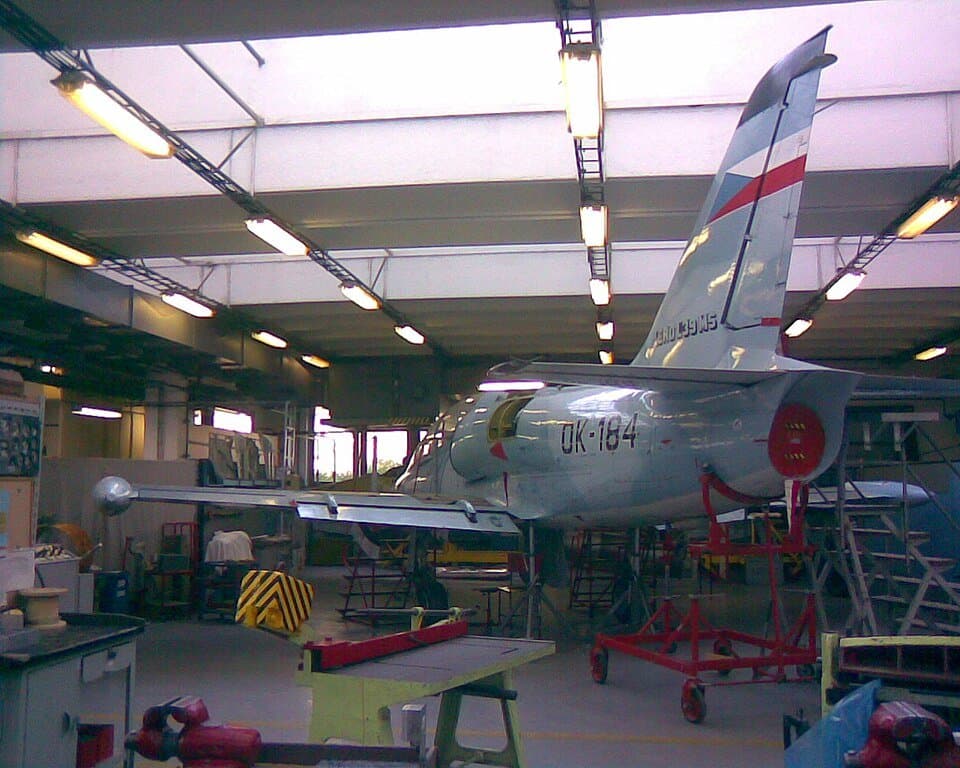
Credit
Michal šenki · Public domain · Resized · Public domain · Source ↗ · Modified


Preparing your view.

At a glance
Measured figures
L-59E · Length
Single source12.20 m (40 ft 0 in)[source]
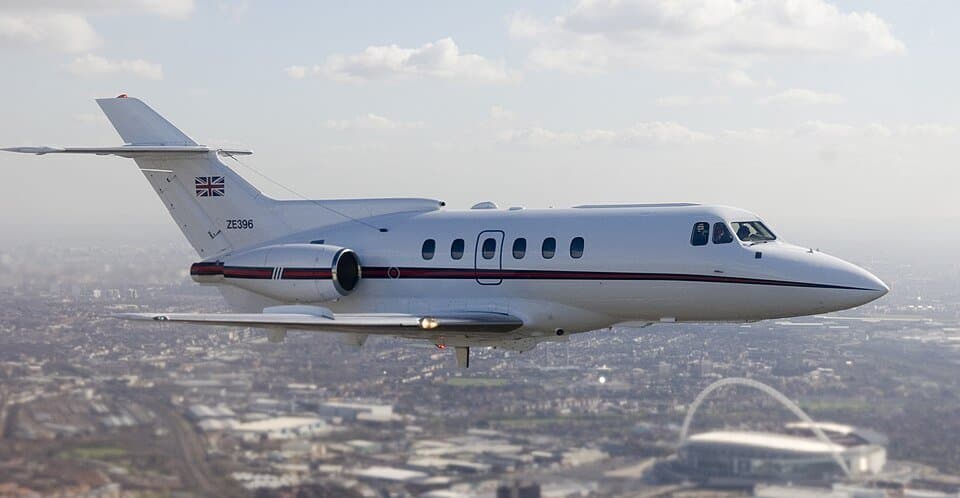
HS.125 Series 600 · Length
Single sourceConfiguration
| Specification | Aero L-59 Super Albatros | British Aerospace 125 |
|---|---|---|
| Type | Military trainer aircraft COIN[source] | Mid-size business jet[source] |
| Manufacturer | Aero Vodochody[source] | de Havilland (design) Hawker Siddeley (to 1977) British Aerospace (1977–1993) Raytheon (1993–2007) Hawker Beechcraft (2007–2013)[source] |
| Status | Out of production, in service[source] | Active service[source] |
| Primary users | Czech Air Force Egyptian Air Force Tunisian Air Force |
50 ft 6 in (15.39 m)[source]
Empty; L-59E · includes gun
Single sourceMaximum take-off; L-59E · Max takeoff weight
Single source4,030 kg (8,885 lb) (includes gun)[source]
7,000 kg (15,432 lb)[source]
Empty; HS.125 Series 600 · Empty weight
Single sourceMaximum take-off; HS.125 Series 600 · Max takeoff weight
Single sourceL-59E · at 7,000 m (23,000 ft) (with maximum internal and external fuel)
Single source2,000 km (1,200 mi, 1,100 nmi) at 7,000 m (23,000 ft) (with maximum internal and external fuel)[source]
HS.125 Series 600 · 1,000 lb (454 kg) payload, 45 minutes reserve plus allowances for take-off and landing
Single source1,650 nmi (1,900 mi, 3,060 km) 1,000 lb (454 kg) payload, 45 minutes reserve plus allowances for take-off and landing[source]
L-59E · 1 × Lotarev DV-2 turbofan thrust
Single source1 × Lotarev DV-2 turbofan , 21.57 kN (4,850 lbf) thrust[source]
HS.125 Series 600 · 2 × Rolls-Royce Viper 601-22 turbojet engines thrust each
Single source2 × Rolls-Royce Viper 601-22 turbojet engines, 3,750 lbf (16.7 kN) thrust each[source]
Bars compare reported quantities only. A larger figure does not make a system better; configurations and test conditions differ.
Japan Air Self-Defense Force Brazilian Air Force[source] |
| Number built | 80[source] | 1,720[source] |
|---|
| Manufactured | 1986–1996[source] | 1963–2013[source] |
|---|
| First flight | 30 September 1986[source] | 13 August 1962[source] |
|---|
| Developed from | Aero L-39 Albatros[source] | — |
|---|
| Variant | Aero L-159 ALCA[source] | Hawker 800[source] |
|---|
| Fuel capacity | 1,537 L (406 US gal; 338 imp gal) including tip tanks[source] | 1,181 imp gal (1,418 US gal; 5,369 L) usable fuel[source] |
|---|
| Stall speed | 185 km/h (115 mph, 100 kn) (flaps down)[source] | 83 kn (96 mph, 154 km/h) EAS flaps down[source] |
|---|
| Guns | one GSh-23L cannon in under-fuselage pod[source] | — |
|---|
| Hardpoints | four underwing hardpoints with a capacity of inner hardpoints 500 kg (1,100 lb)capacity, outer hardpoints 250 kg (550 lb)[source] | — |
|---|
| Country of origin | Czechoslovakia[source]Inventory Origin column; table 1, row 26, cell 2; revision 1374778711; retrieved 2026-10-01 | United Kingdom[source] |
|---|
| Capacity | — | 8 passengers (normal layout), 14 passengers in high density layout[source] |
|---|
| Aspect ratio | — | 6.25:1[source] |
|---|
| Never exceed speed | — | 475 kn (547 mph, 880 km/h) IAS[source] |
|---|
| Take-off run | — | 4,400 ft (1,300 m)[source] |
|---|
| Take-off balanced field length | — | 5,350 ft (1,630 m)[source] |
|---|
| Landing run | — | 3,400 ft (1,000 m) -600A at typical landing weight[source] |
|---|
| Landing distance from 50 ft (15 m) | — | 2,130 ft (650 m) at typical landing weight[source] |
|---|